Why Your Tapas Night Always Ends With a Pizza Order (And How Spanish Bartenders Fix That)
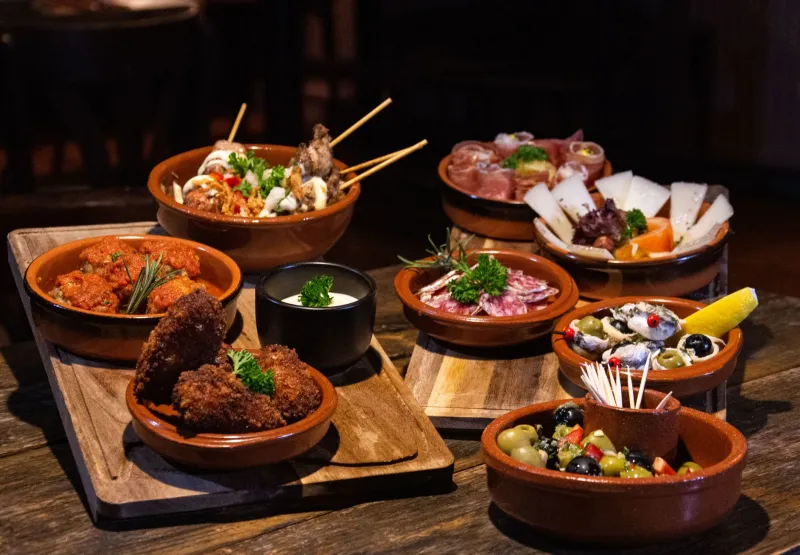
You did everything right. You made the patatas bravas. You picked up good Manchego. You even tracked down a decent Spanish Garnacha at your local wine shop. And yet, somewhere around 9 p.m., someone quietly pulled out their phone and the conversation shifted toward "should we just get something delivered?"
This is what we call the tapas trap — and it catches American hosts all the time.
Here's the thing: the problem almost never comes down to the food itself. Your cooking is probably fine. The issue is the architecture of your spread. Spanish bartenders — the ones running the show at packed pintxos bars in San Sebastián or busy tabernas in Madrid — understand tapas as a complete eating system. Most of us in the U.S. treat them as fancy appetizers. That single misunderstanding is the difference between a table that lingers for three hours and one that quietly deflates by the second round of wine.
The Appetizer Mindset Is Sabotaging You
When Americans think tapas, we often picture a few bites before the "real" food. That framing is baked deep into how we host. We put out a handful of small plates, they disappear in fifteen minutes, and then there's this awkward moment where everyone is still a little hungry but the "meal" is technically over.
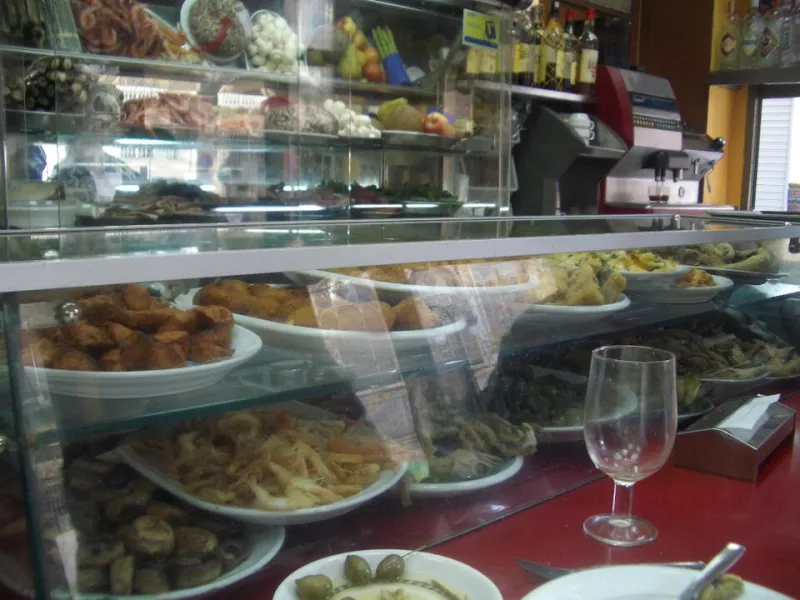
In Spain, that scenario doesn't exist — because tapas are the meal. A proper Spanish bar doesn't think of its spread as a prelude to something bigger. The bartender's job is to keep you at the rail, nursing your drink, eating steadily, and feeling satisfied without ever hitting that heavy, slouch-in-your-chair fullness that ends a dinner party early.
That's a fundamentally different design goal, and it changes everything about how the food gets built.
The Three-Part Balance Spanish Bars Never Skip
Ask any experienced Spanish bartender what makes a good tapas spread work, and they'll describe — consciously or not — a balance of three things: protein, fat, and something starchy or bread-based. Every round of plates that comes out of a well-run kitchen hits all three categories in some combination.
Protein does the heavy lifting. It's what keeps your guests from feeling hollow. Jamón, anchovies, a small dish of albóndigas, grilled chorizo, or a simple tortilla española — these are the anchors. Without enough protein distributed across the evening, people eat a lot of food and still feel vaguely unsatisfied. It's a common trap with cheese-and-charcuterie-heavy spreads that lean too hard on fat without the grounding effect of actual protein.
Fat is the satisfaction extender. This is where olive oil, aioli, Manchego, fried elements, and rich sauces come in. Fat slows digestion and signals fullness to your brain, which is exactly why a dish of pan con tomate drizzled generously with good olive oil feels more filling than it has any right to. Spanish cuisine is unapologetically fatty — and that's not accidental. It's engineering.
Starch is the pacer. Bread, potatoes, croquetas, rice-based dishes — these slow the absorption of everything else and give your guests something substantial to work against. A spread without enough starch moves too fast. People eat through it quickly, the wine hits harder on an empty base, and the evening loses its rhythm.
The magic of a Spanish bar spread is that these three elements keep rotating through in waves, so nobody ever reaches a point of genuine hunger or uncomfortable fullness. It's a slow, steady burn — and that's exactly what you want from a long, social evening.
Timing Is the Skill Nobody Talks About
Beyond the balance of macronutrients, Spanish bartenders understand pacing in a way that most home hosts don't even consider. They don't put everything out at once.
In a Spanish bar, plates arrive gradually. You get something to start — maybe a bowl of olives, a bit of bread, a small tapa that comes with your first drink. Then, as the evening moves and the conversation deepens, more food appears. This isn't just hospitality theater. It's intentional. Spreading food across time keeps people engaged, gives them something to look forward to, and prevents that frantic first-fifteen-minutes rush where everyone piles their plates and the spread is gone before latecomers even sit down.
For your next hosting situation, try holding back a third of your spread. Get your guests settled with something light — olives, almonds, a simple slice of jamón. Let that breathe for twenty minutes. Then bring out your heavier, more substantial plates. Save something warm and satisfying — a small cazuela of gambas al ajillo, a tray of croquetas fresh from the pan — for the later stretch of the evening when energy tends to dip.
That late-night warm plate is your insurance policy against the pizza order.
Building Your Spread With Intention
Here's a practical framework to steal directly from the Spanish playbook:
Start light, finish warm. Open with room-temperature or cold items — cured meats, cheese, marinated vegetables, good bread. Save anything fried or hot for the middle and later rounds.
Always have a potato on the table. Patatas bravas, a wedge of tortilla española, or even a simple bowl of papas aliñás (dressed potatoes) give your guests an anchor. Potatoes are the unsung heroes of Spanish bar food for a reason.
Don't underestimate the egg. Tortilla española is one of the most filling, cost-effective, and universally loved tapas in existence. A single well-made tortilla can shift the entire energy of a spread from "snacky" to "satisfying." If you're not making one, start.
Match something briny with something rich. Anchovies next to creamy cheese. Pickled peppers alongside fried croquetas. The contrast keeps palates awake and prevents flavor fatigue — which is another reason people stop eating and start looking for something else.
Keep something in reserve. Even if it's just a jar of good olives or a tin of quality conservas, having something you haven't put out yet gives you a rescue option if the table starts looking restless.
The Real Secret Is Respect for the Ritual
At the end of the day, what Spanish bartenders understand that most American hosts miss is that tapas aren't about the food in isolation — they're about the experience of eating together over time. The food is designed to support conversation, not interrupt it. Each plate is a small event, a reason to pause, react, share.
When you build your spread with balance and pacing in mind, you're not just feeding people. You're giving the evening a structure — a gentle, delicious rhythm that keeps everyone at the table, present and happy, until nobody wants to leave.
And that's the whole point.