Why Six Small Plates Will Always Outperform Three Big Ones at Your Next Gathering
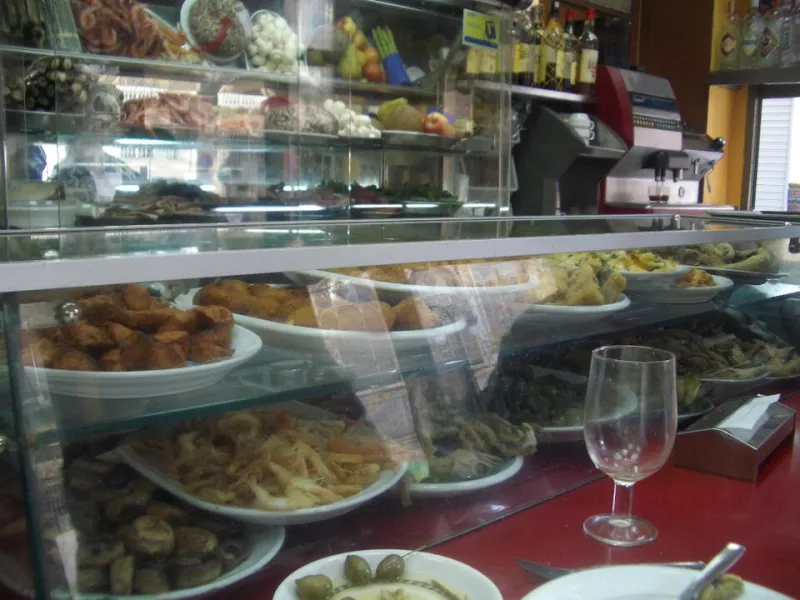
Photo: Mike Rosenberg, CC BY-SA 3.0, via Wikimedia Commons
Picture a typical American dinner party. Someone passes the salad. Then the main comes out — a big roasted chicken or a lasagna — and everyone piles their plates high because, well, that's the cue. By the time dessert rolls around, half the table is unbuttoning their pants and the other half is scraping leftovers into containers. The conversation had one real peak, somewhere around the entrée, and now it's winding down fast.
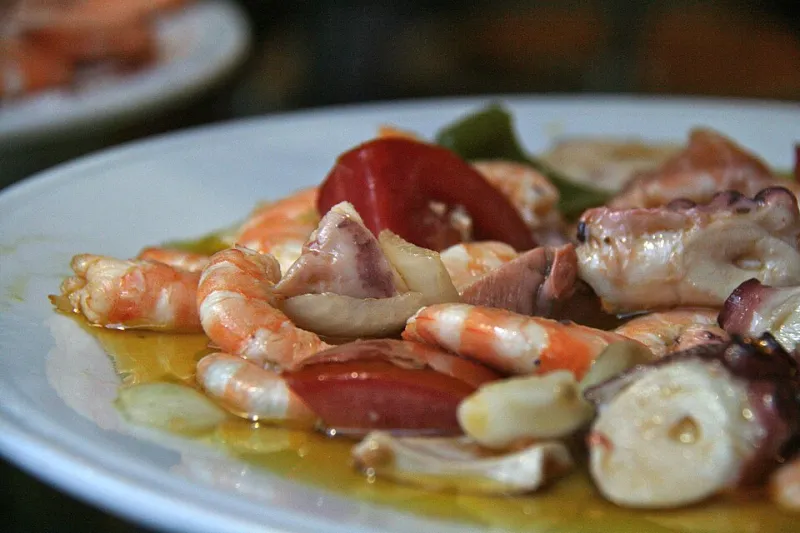
Now picture a Spanish table. Six, seven, eight small plates arriving in waves. A little jamón here. Some warm olives. Patatas bravas. A plate of grilled shrimp. Nobody's stuffed after round one because round one wasn't meant to be the whole story. The meal breathes. The table stays lively. And somehow, everyone feels more satisfied at the end — even though they probably ate less total food.
That's the tapas math. And once you understand it, you'll never look at a dinner party the same way again.
The Psychology Behind the Plate Count
Food researchers have spent a surprising amount of time studying how portion structure affects satisfaction, and the findings consistently point in the same direction: variety triggers something in the brain that sheer volume never can. When we eat multiple distinct flavors and textures across a meal, our brains register the experience as richer and more complete — even when the total caloric intake is lower.
This is partly why tapas eaters in Spain don't typically overeat the way American diners do at all-you-can-eat buffets. The variety itself does the work. Each new plate resets your attention, gives you something fresh to taste, and extends the pleasure of the meal without requiring you to pile on more of the same thing.
For your guests, this translates into something really practical: they feel genuinely looked after. A host who brings out six thoughtfully chosen small plates has clearly put in the effort. A host who drops one big casserole on the table — even a delicious one — reads as efficient, not generous. The tapas structure signals abundance through diversity, not mass.
How the Flow of a Tapas Meal Keeps Conversation Alive
Here's something nobody talks about enough: food service is a pacing mechanism. Every time a new plate hits the table, the conversation pivots. Someone reacts to the dish. Someone asks what's in it. Someone passes it across to the person who hasn't tried it yet. That little social transaction — repeated six or eight times over the course of an evening — keeps the energy at the table moving in a way that three static courses simply can't replicate.
Traditional American plating creates natural dead zones. The gap between courses is awkward. People finish at different speeds and end up staring at each other's plates. The host disappears into the kitchen right when the table is at its most lively.
With tapas, you can time your plates to keep things humming. Start with something cold and easy — good olives, maybe some marcona almonds and a slice or two of cured meat — while you finish the warm stuff. Bring out the hot plates in two or three waves. End with something sweet or a cheese board. The meal becomes a rhythm rather than a sequence of events, and your guests feel the difference even if they can't name it.
The Waste Factor Nobody Wants to Talk About
Let's get honest about food waste for a second. When you serve a large main course American-style, you're guessing. You're guessing how hungry everyone is, whether people have dietary restrictions they didn't mention, whether the vegetarian at the table is quietly going to skip the centerpiece dish. And when you guess wrong, you end up with half a roast nobody wanted and a refrigerator full of guilt.
Tapas naturally solves this. Smaller plates mean smaller commitments. If one dish doesn't land — maybe your croquetas got a little too dark, or someone at the table turns out to not love anchovies — it's a minor correction, not a dinner-ruining moment. You serve more of what's working, less of what isn't, and you're not locked into a structure that wastes food just because the portions were sized for a different appetite.
For home cooks in the US, this is a genuine financial argument too. Six small plates spread across a few proteins, some vegetables, a bread component, and maybe a cured meat situation will often cost less than a single impressive centerpiece — and they'll leave your guests more satisfied and your kitchen less chaotic.
Rethinking What "Enough" Actually Means
American food culture has a complicated relationship with fullness. We tend to equate a successful meal with a full stomach, which means hosts often overfeed because they're afraid of the opposite. The fear of someone leaving hungry is so strong that we default to excess — massive portions, seconds pushed on people who've already had enough, dessert offered before anyone's even asked.
Spanish food culture operates from a different baseline. The goal isn't satiety in the American sense — that heavy, couch-bound feeling after a big plate of pasta. The goal is pleasure sustained over time. A good tapas spread keeps you at the table because you want to be there, not because you're waiting for your body to process what just happened.
For your guests, this means they leave feeling good rather than wrecked. They remember the meal as lively and generous. And that's a better outcome for everyone — including you, the host who didn't spend three hours making something that disappeared in twelve minutes.
Making the Math Work in Your Kitchen
If you're ready to try the tapas approach at your next gathering, the planning shift is simpler than it sounds. Instead of asking "what's my main dish?", ask "what are my six things?" Aim for a balance of temperatures (some warm, some room temp), textures (something crispy, something soft), and protein types (one meat, one seafood, one vegetarian at minimum).
You don't need to cook everything from scratch. The Spanish pantry is built around high-quality preserved ingredients — good canned tuna, jarred roasted peppers, quality olives, a wedge of Manchego — that require zero cooking and still read as intentional and delicious. Fill in the gaps with one or two genuinely cooked items, and you've got a spread that looks abundant without requiring an all-day kitchen commitment.
The tapas math isn't complicated. More plates, smaller portions, better balance, less waste, livelier table. Spain figured this out centuries ago. Your dinner party is just catching up.