Stop Waiting for Midnight: How to Make Tapas Work for the American Dinner Party
Photo: Robert Avalon, Unknown, CC BY 3.0, via Wikimedia Commons
There's a moment every tapas-loving American host eventually faces. You've laid out the jamón, the padróns are blistering in the pan, the Albariño is chilled, and your guests—invited for 7pm—are already glancing at their phones at 9:30, wondering when the "real food" is coming. Nobody warned you that the philosophy behind tapas and the reality of American social schedules were quietly at war with each other.
Spain built its grazing culture around a completely different relationship with time. Lunch is the main event, often running two hours or more. Dinner doesn't start until 9 or 10pm at the earliest. The tapas bar is a third place—not quite home, not quite a formal restaurant—where people linger, order another round, and let the evening dissolve naturally. There's no check coming to hurry you out. There's no school night logic creeping in.
American life doesn't work that way, and pretending it does is exactly what kills the vibe at so many well-intentioned tapas nights.
The Real Problem Isn't the Food—It's the Format
Most hosts who love tapas make the same mistake: they borrow the menu without borrowing the structure. They put out a spread of small plates and assume the evening will naturally stretch and breathe the way it does in a Barcelona bar. But without the cultural scaffolding—the late start, the open-ended timeline, the built-in expectation of a slow night—guests default to American dinner party mode. They're waiting for a main course that never comes. They're not sure when to eat, how much to take, or whether it's weird that nobody is sitting down.
The fix isn't to abandon the tapas approach. It's to build a timeline that actually matches how Americans socialize, while keeping the communal, unhurried spirit intact.
Start Earlier, But Build In Stages
If your guests are arriving at 6:30 or 7pm, lean into it. The Spanish may eat late, but that doesn't mean early can't be leisurely. The trick is to resist the urge to put everything out at once. Americans are conditioned to see a fully loaded table as an invitation to eat fast and move on. Instead, think in waves.
Start light—a few olives, some marcona almonds, maybe a simple dish of boquerones or a smear of romesco on good bread. This is the aperitivo moment, the equivalent of arriving at a Spanish bar and ordering a drink that comes with a small bite. Keep the kitchen working quietly in the background. Let conversation settle in before the food ramps up.
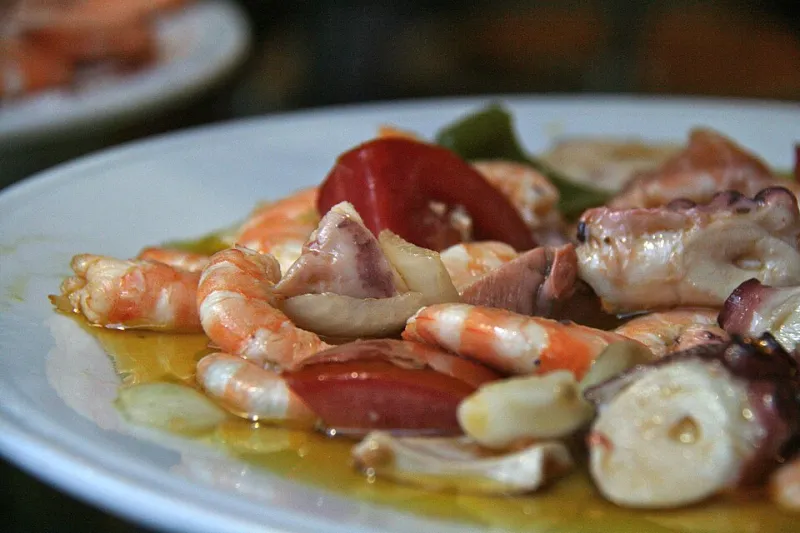
About 45 minutes in, bring out the heartier plates: the tortilla española, the patatas bravas, the gambas al ajillo still sizzling in their little clay dish. This is your signal to guests that the evening has entered a new gear—without anyone needing to stand up, change rooms, or sit down at a formal table.
Shrink the Guest List, Expand the Conversation
Spanish tapas culture is inherently intimate. You're sharing plates, reaching across each other, tasting from the same dish. That works beautifully with six people. It gets logistically messy with fourteen.
For American hosts, smaller gatherings are actually a secret advantage. A group of four to eight people can graze, talk, and linger in a way that a larger party simply can't. You don't need a crowd to create that warm, convivial energy—you just need the right conditions. Low lighting, good wine, food that keeps appearing in small increments, and a host who isn't disappearing into the kitchen for twenty-minute stretches.
If you do want to host a bigger group, consider breaking the space into zones rather than one long table. A kitchen counter with a few plates, a living room coffee table with another round, a back patio with the drinks. Let people move. That's closer to how a Spanish bar actually functions anyway.
Give Guests a Roadmap (Without Ruining the Surprise)
One underrated hosting move: tell people what to expect before they arrive. A quick text or note that says "We're doing tapas-style—small plates coming out in waves over a couple of hours, so come hungry but don't wait for a main course" does more work than you'd think. It removes the ambient anxiety about when to eat and how much, which frees everyone up to actually relax.
You don't need to hand out a menu. Just set expectations loosely. Americans are great guests when they know what kind of evening they're walking into.
The Condensed Timeline That Actually Works
Here's a rough framework that preserves the tapas spirit without testing anyone's patience or bedtime:
6:30pm — Guests arrive, drinks are poured. One or two light bites on the table. The goal is conversation, not eating.
7:15pm — First real wave of plates. Three or four dishes, nothing too heavy. This is the moment the evening shifts from cocktail party to something more intentional.
8:00pm — Second wave. Bring out the richer, more satisfying plates. If you're doing something that needs a little theater—a whole roasted head of garlic, a bubbling cazuela—this is the moment for it.
8:45pm — Wind down with something sweet. Churros, a wedge of Manchego with honey and walnuts, or just a plate of good chocolate. Signal that the eating portion is winding down, but the night doesn't have to be.
This gets you through a full, generous tapas experience in about two and a half hours—which is enough time for the meal to feel unhurried, but not so open-ended that guests feel stranded.
The One Thing You Shouldn't Compromise
Among all the adjustments you make for an American audience, protect the pace of the meal itself. Resist the urge to rush plates out, to clear too quickly, or to fill every silence with more food. The pauses between waves are where the conversation actually happens. They're not dead time—they're the point.
Tapas isn't really about the food alone. It's about the particular rhythm of eating a little, talking a lot, eating a little more, and letting the evening take its time even when your evening has a curfew. That rhythm is absolutely portable. It just needs a slightly earlier start time and a host who's willing to let things breathe.
Spain figured out something worth keeping. You don't have to stay up until midnight to steal it.