Why Your Homemade Tapas Spread Costs More Than a Night Out (And How to Fix That)

Photo by Photo by Ezgi Deliklitas on Unsplash on Unsplash
Somewhere between the third wedge of imported Manchego and the second jar of specialty olives, most American home hosts cross a financial threshold they didn't see coming. You planned a casual tapas night. You wanted something relaxed, social, affordable. And somehow you've spent $90 before anyone's poured the first glass of wine.
This isn't a personal failure. It's a structural one — a mismatch between how tapas culture actually operates in Spain and how we've reimagined it here in the States. Understanding that gap doesn't just save you money. It makes your gatherings genuinely better.
The Abundance Trap
American entertaining culture has a deep-seated fear of not having enough. We over-buy. We over-prepare. We treat "running out" as a social catastrophe rather than a natural endpoint to a meal. This anxiety gets especially expensive when applied to tapas, because the format seems to encourage variety — and variety costs.
When you decide you need eight different small plates for six guests, you're committing to eight separate shopping lists, eight sets of prep time, and eight opportunities to reach for premium ingredients because, hey, there's not much of each one so it should be good, right?
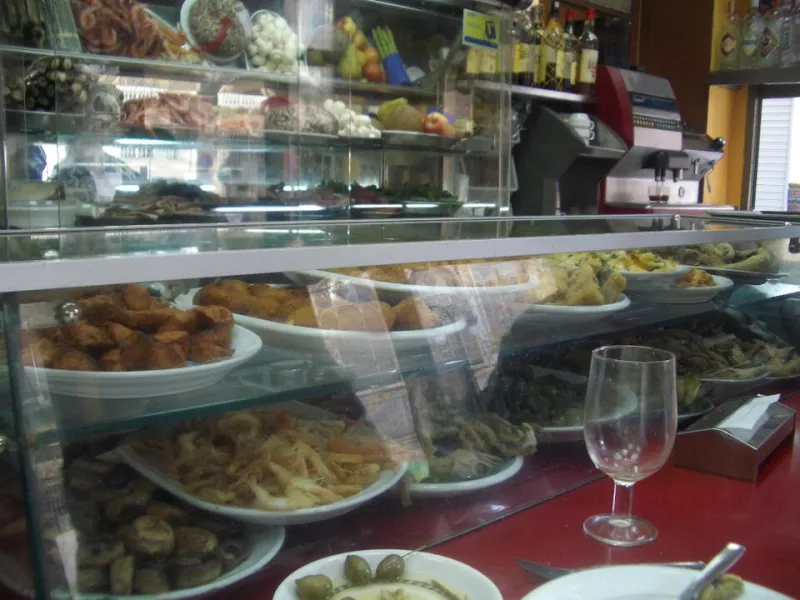
Spanish bars don't think this way. A neighborhood tapas spot in Seville or San Sebastián might rotate through four or five things on a given evening — done exceptionally well, served repeatedly, and never once feeling stingy. The abundance isn't in the variety. It's in the quality and the refilling.
What You're Actually Paying For
Let's break down where the money actually goes in a typical American home tapas spread.
First, there's the specialty ingredient premium. Jamón ibérico, proper pimentón de la Vera, aged sherry vinegar — these are genuinely worth having, but they're not the backbone of every dish. When every plate on your table features a specialty item, costs stack fast.
Then there's portion miscalculation. Tapas are small plates, so the instinct is to make more of them. But more dishes doesn't always mean more food — it means more shopping, more prep bowls, and more half-used containers of things you bought specifically for one recipe.
Finally, there's the waste factor. A spread of twelve small things means twelve things that might not get fully finished. In a restaurant, portioning is precise. At home, we eyeball it and err on the side of too much.
How Spanish Culture Keeps Costs Low Without Feeling Cheap
Here's the thing that surprises most people when they first encounter tapas in Spain: the experience rarely feels budget-conscious, even when it is. That's not an accident.
Spanish tapas culture is built around a few principles that naturally regulate spending:
Simplicity as sophistication. Pan con tomate — bread rubbed with tomato and drizzled with olive oil — is one of the most beloved tapas in Catalonia. The ingredients cost almost nothing. The technique is effortless. But served well, with good bread and ripe tomatoes, it's genuinely satisfying. Spanish cooks don't apologize for simple food. They perfect it.
The anchor dish model. Rather than six equally weighted plates, a Spanish spread often has one or two anchor dishes — a tortilla española, a generous bowl of gambas al ajillo — surrounded by lighter, cheaper accompaniments. The anchors create the sense of abundance. The accompaniments provide variety without breaking the budget.
Communal rhythm over individual servings. Tapas in Spain are meant to be shared and replenished, not plated once and exhausted. This changes how you shop. Instead of buying enough of everything for everyone, you buy enough of a few things to keep the table feeling full. It's a subtle shift that has a real impact on your grocery total.
Practical Moves for Your Next Spread
So how do you actually recalibrate? A few strategies that work without making your guests feel like they're eating on a budget:
Pick two anchor dishes and build around them. Decide on one protein-forward plate (chorizo with white beans, say, or a classic tortilla) and one vegetable-forward option (roasted peppers, marinated mushrooms). Then fill the rest of the table with pantry staples — good olives, crusty bread, a wedge of cheese. You've created variety without multiplying complexity.
Buy one premium ingredient, use it strategically. If you want Manchego on the table, buy one good piece and slice it thin. Let it be the star. Don't also buy imported anchovies, specialty tinned mussels, and aged sherry alongside it. One splurge per spread is plenty.
Lean on eggs and potatoes. This sounds almost too obvious, but the Spanish figured out centuries ago that eggs and potatoes are the foundation of some of the most satisfying small plates in existence. A proper tortilla española feeds eight people for under $10 in ingredients. No tapas spread should be without one.
Make things that improve with time. Marinated olives, pickled vegetables, and room-temperature salads all taste better after sitting a while — and they free you from last-minute cooking stress. More importantly, they're cheap to make in quantity and they hold well, so nothing goes to waste.
Stop buying for every scenario. Americans tend to over-provision for the imaginary guest who doesn't drink wine, hates olives, and is avoiding gluten. In Spain, the host makes what they make. Guests eat what's there. Trusting your spread is part of the hospitality.
A Different Kind of Generosity
The deeper shift here isn't really about money. It's about what generosity actually means at the table.
American entertaining often equates generosity with volume and variety — more dishes, more options, more stuff. Spanish tapas culture defines generosity differently: as time, as attention, as the care put into a few things done right. A host who makes one spectacular tortilla and pours good wine is being more generous, in the Spanish sense, than one who exhausted themselves producing twelve mediocre plates.
Once you internalize that, the economics take care of themselves. You're no longer shopping to impress. You're shopping to feed people well — which, it turns out, is a much cheaper and more satisfying goal.
Your next tapas night doesn't need to cost less to feel better. But it probably will anyway.