Your Tapas Spread Looks Incredible — So Why Is Everyone Ordering Domino's at 11pm?
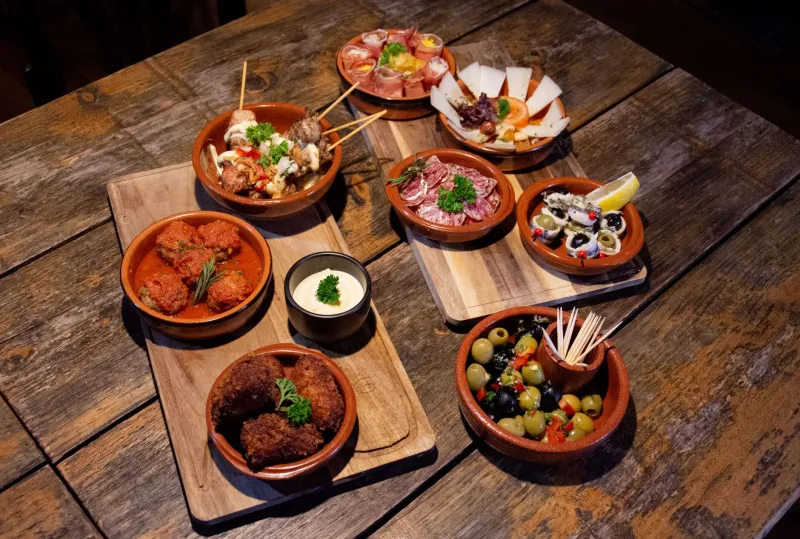
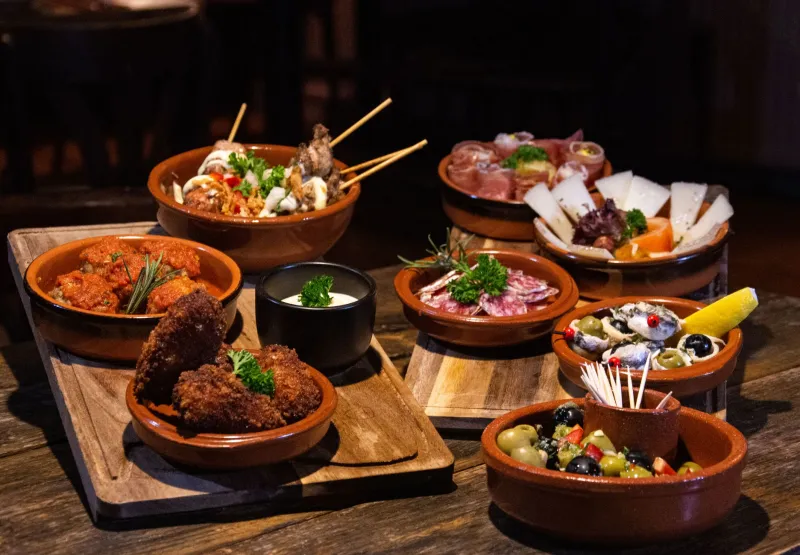
You spent the better part of a Saturday afternoon arranging jamón, threading olives onto little picks, and stacking Manchego slices into a fan pattern that would make a food stylist weep with pride. The whole thing photographs beautifully. Your guests say "oh wow" when they walk in. And then, somewhere around 10:45pm, someone quietly pulls out their phone and the Domino's app.
This is the tapas trap. And it catches more American home hosts than almost any other entertaining mistake.
The problem isn't your taste. It isn't your ingredients. It's a fundamental misunderstanding of what a tapas spread is actually supposed to do — and it comes down to the difference between feeding people's eyes and feeding their actual hunger.
The Visual Abundance Illusion
Here's what happens when most of us plan a tapas night: we think in terms of variety and visual coverage. We want the board to look full. We want color contrast, height variation, something draped elegantly over something else. We're essentially designing a photograph.
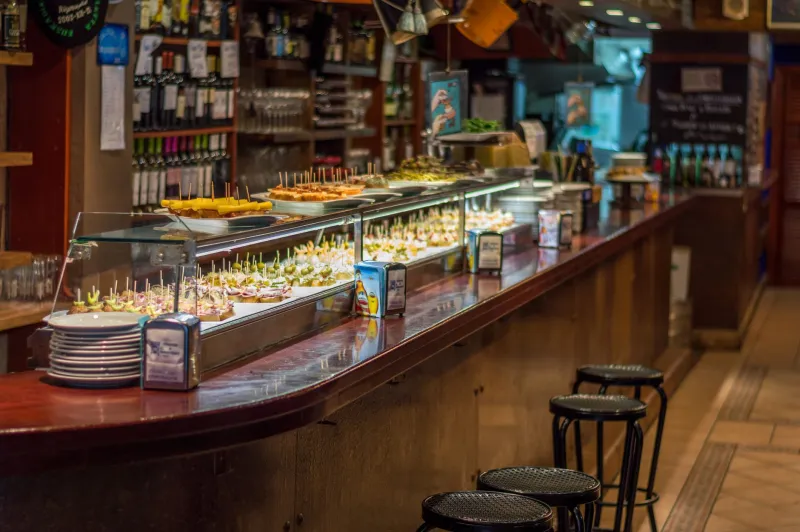
Spanish bartenders — the real ones, the ones running a busy bar in Seville or San Sebastián — think about it completely differently. They're not curating an aesthetic. They're managing a crowd of people who are drinking, talking, and burning through energy. Their job is to keep those people happy and in their seats. And happy, in this context, means genuinely satisfied.
The visual abundance illusion is sneaky because a spread can look generous while delivering almost no caloric substance. Eight types of cured meat arranged beautifully across a board might represent fewer actual bites per person than a single bowl of patatas bravas. Thin slices, small portions, and delicate items are all eye-catching — and all terrible at filling people up.
Why Protein and Fat Alone Won't Save You
A lot of tapas spreads lean hard on charcuterie and cheese. Jamón, chorizo, salchichón, a couple of wedges of Manchego or Idiazábal. These feel substantial because they're rich and flavorful. And they are — in moderate quantities, as part of a larger spread.
But here's what often gets left out: carbohydrates. Not as filler, but as the structural backbone of genuine satiation. In a real Spanish bar, the bread isn't a side thought. Pan con tomate isn't garnish. Croquetas, patatas bravas, tortilla española — these starchy, filling plates are doing the heavy lifting that lets everything else feel like indulgence rather than survival.
When American hosts skip the carb element — or treat it as optional — they're removing the foundation of the whole spread. Guests end up eating rich, flavorful bites that don't accumulate into fullness. It's like building a house with beautiful windows and no walls.
The Spanish Formula (And How to Steal It)
So what does a strategically constructed tapas spread actually look like? Here's a rough framework that mirrors how experienced Spanish bartenders approach it.
Start with something immediate and filling. Before anything else hits the table, get bread in front of people. Pan con tomate — good bread rubbed with ripe tomato and drizzled with olive oil — takes about four minutes and immediately starts the satiation clock. Olives work here too, but bread is the anchor.
Build your spread around one hot, starchy centerpiece. Croquetas, patatas bravas, pan-fried padróns, tortilla española — pick one. This is your workhorse. It should be the most abundant thing on the table in terms of actual volume. Everything else orbits it.
Use two to three protein elements, not five. Variety feels generous but dilutes impact. Two excellent proteins — say, jamón and a good chorizo — give guests something to return to. Five thin-sliced options means everyone takes one piece of each and nobody gets enough of anything.
Add one vegetable or seafood element for contrast. Marinated white anchovies, boquerones, a simple escalivada, roasted peppers with olive oil. This is your palate reset between the richer items.
Finish with something warm and savory, not sweet. Spanish tapas culture doesn't really do a dessert moment the way American dinner parties do. A second round of something warm — more croquetas, a small dish of gambas al ajillo — signals abundance without triggering the "okay, what's for real dessert" moment that can derail the whole evening.
Doing the Math Nobody Talks About
Portion math for tapas is genuinely confusing because the whole point is that plates are small. Here's a simple calculation that works for most groups.
For a two-hour tapas gathering with drinks, plan for roughly eight to ten distinct bites per person. Not eight to ten dishes — eight to ten individual pieces or spoonfuls of food per guest. A croqueta counts as one bite. A slice of jamón counts as one bite. A small piece of tortilla counts as one bite.
For a group of six people, that's 48 to 60 individual bites across the whole spread. When you map it out that way, you'll almost always realize you were planning to undercook. That beautiful charcuterie board with twelve slices of meat across four types? That's two bites per person. Not a spread — a tease.
Double your starchy items. Halve your variety. The spread will look less Instagram-ready and your guests will still be happily seated at midnight.
Sequencing Matters More Than Quantity
One thing Spanish hosts do instinctively that American hosts often miss: they don't put everything out at once. Pacing is a tool.
When all the food arrives simultaneously, guests graze. They pick at things, take small amounts, feel vaguely like they shouldn't eat too much of any one thing. When food arrives in waves — bread first, then the cold items, then the hot plates — guests eat with intention. Each arrival feels like an event. And people end up eating more, more happily, without feeling like they overate.
If you're hosting at home, this is actually easier than it sounds. Set out the bread and olives when guests arrive. Bring out the charcuterie and cheese after twenty minutes. Pull the hot items from the oven thirty minutes in. You'll feel more like a host and less like a caterer, and your guests will feel like they're being taken care of rather than left to fend for themselves at a buffet.
The Real Goal of Tapas Hospitality
Here's the thing about how Spaniards think about this: the goal of a tapas spread was never to impress. It was to sustain. To keep good people in good conversation for as long as possible, fueled and comfortable and never quite full enough to want to leave.
That's a different design brief than "make something that looks great on a board." And once you start hosting with that goal in mind — satiation first, beauty second — you'll find that the midnight pizza order quietly disappears from your guests' evenings.
Your spread might photograph a little less dramatically. But nobody will be sneaking off to order delivery while you're still refilling the wine.