One Plate at a Time: The Art of Pacing a Tapas Spread (And When to Throw the Rulebook Out)
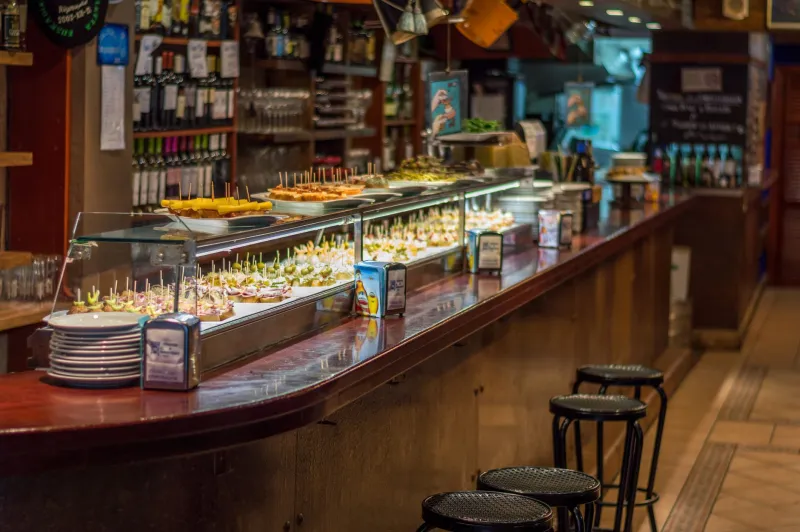
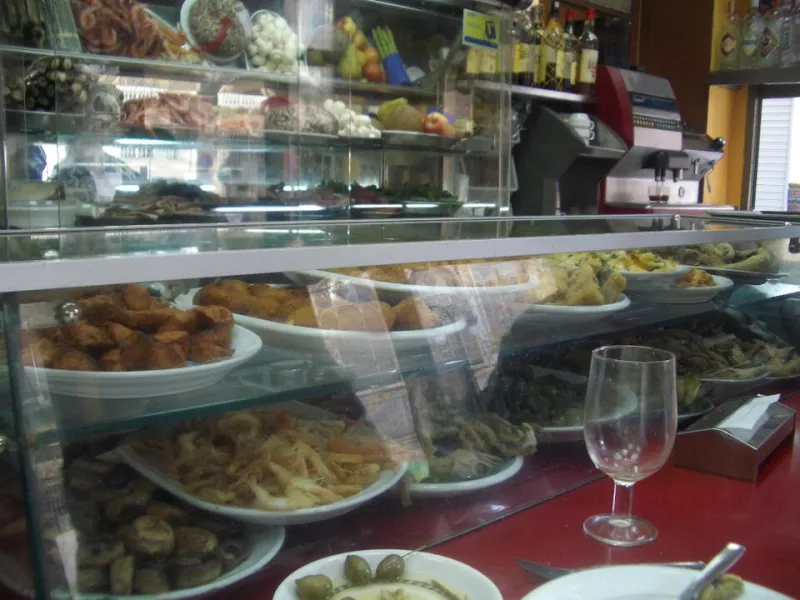
Walk into almost any bar in Seville or San Sebastián and pay attention to what's happening at the counter. The bartender isn't frantically hauling out eight plates the moment you sit down. Instead, something more deliberate is unfolding — a dish of olives here, a slice of jamón there, a small cazuela of gambas al ajillo arriving just when you've finished your second sip of fino. It feels effortless, almost accidental. It is absolutely neither of those things.
That pacing is intentional, practiced, and deeply tied to how Spanish food culture understands pleasure. And if you're hosting tapas nights at home — whether it's a casual Friday thing with neighbors or a more ambitious dinner party situation — understanding why Spanish bars sequence their plates the way they do will genuinely change the energy in your dining room.
Then we'll talk about when to ignore all of it.
Why the Sequence Actually Matters
At its core, staggered tapas service is about managing appetite and attention at the same time. When everything lands on the table simultaneously, guests make fast decisions — they gravitate toward the most familiar thing, pile their plates, and the experience collapses into a buffet with better lighting. The conversation stalls because everyone's focused on not missing out.
When plates arrive in waves, something different happens. Guests stay present. There's anticipation. The conversation has natural pauses built in — a new plate lands, everyone leans in, opinions get shared, wine gets poured. The meal becomes an event rather than a transaction.
Flavor progression plays a role here too, and it's worth taking seriously. Spanish bartenders typically move from lighter, more acidic or briny flavors toward richer, heartier ones. You might start with something like marinated anchovies or a simple pan con tomate — bright, clean, palate-opening flavors that get your appetite engaged without overwhelming it. From there, you might move toward something with more fat and depth: a wedge of tortilla española, some patatas bravas with aioli, maybe a plate of chorizo al vino. By the time the heavier stuff arrives — a slow-braised dish, a richer cheese, something with more umami weight — your palate is ready for it and your appetite is still alive.
If you lead with the heavy hitter, you've essentially peaked too early. Your guests are full and a little sleepy before the good stuff even shows up.
A Practical Framework for Home Hosts
You don't need to be running a bar in the Basque Country to apply this logic at home. Here's a loose three-wave structure that works really well for a group of four to eight people:
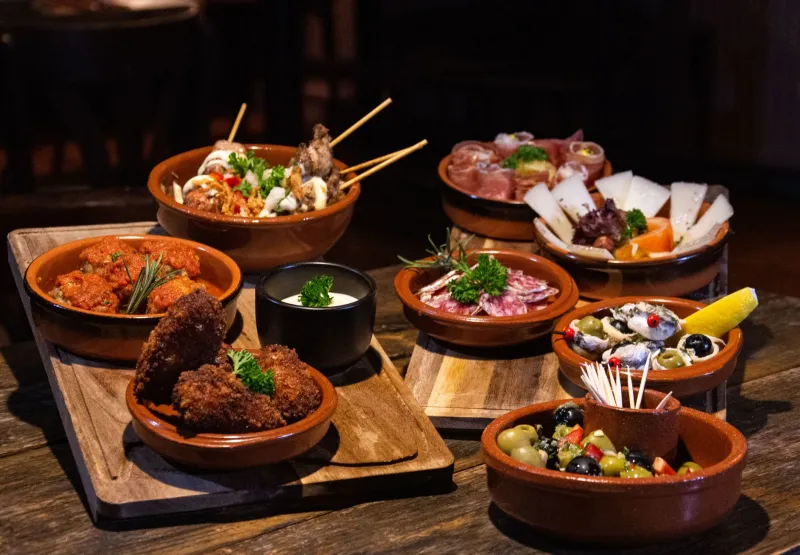
Wave One — The Welcome: This is your lightest, most snackable stuff. Olives, marcona almonds, a simple board of sliced cheese, maybe some pickled vegetables. These go out when guests arrive and are still getting settled. The goal isn't to feed anyone — it's to give hands something to do and signal that good things are coming. Pair with something cold and light: cava, a crisp albariño, or a classic Spanish vermouth on ice.
Wave Two — The Heart of It: This is where your actual tapas shine. Patatas bravas, gambas al ajillo, a Spanish omelet, croquetas, grilled padróns — whatever you've been working on. Bring these out in two or three smaller rounds rather than all at once, spacing them maybe fifteen to twenty minutes apart. This is where the real conversation happens, because guests aren't overwhelmed and the food keeps giving them something new to react to.
Wave Three — The Landing: Something a little heavier or more satisfying to close things out. A small charcuterie moment, a warm bean or lentil dish, maybe a wedge of manchego with honey and walnuts. This is the plate that tells everyone the meal is winding down without anyone having to say it out loud.
Reading the Room: When to Break Every Rule
Here's the thing about hosting in America specifically — your guests have expectations shaped by a completely different food culture. And those expectations are valid. Ignoring them in the name of authenticity is a great way to create anxiety at your own dinner table.
Some situations genuinely call for putting everything out at once:
When guests are hungry and the timing is off. If people are arriving later than planned, or if there's been a long gap since anyone ate, staggered service can feel like torture. Read the room. If someone's eyeing the kitchen every thirty seconds, bring out wave two early.
When your group includes kids or guests with dietary restrictions. Complicated sequencing adds stress when you're already managing multiple needs. A generous spread that everyone can navigate freely is a much better call than an elegant progression that leaves half the table waiting.
When it's a casual hang, not a dinner party. There's a difference between hosting a tapas night and having friends over for drinks and snacks. If the vibe is relaxed and low-key, putting out a generous spread and letting people graze freely is completely appropriate. Not every gathering needs to be a curated experience.
When you're the only one cooking. Staggered service requires you to be somewhat present in the kitchen throughout the meal. If that's going to pull you away from your guests for long stretches, it defeats the purpose. Do more prep ahead of time and simplify the sequencing so you can actually be at the table.
The Mindset Shift That Makes Everything Click
What Spanish bartenders understand — and what's worth internalizing as a home host — is that the goal of tapas service isn't to impress anyone with your knowledge of Spanish food culture. The goal is to keep the energy alive at the table for as long as possible.
Staggered service is a tool for doing that. So is knowing when to set the tool down.
The best tapas nights, whether you're in a cramped bar in Granada or your own kitchen in Chicago or Austin or Portland, share one thing: people lost track of time. They were so engaged in the conversation, the food, the next sip of wine, that an hour felt like twenty minutes.
That's the real tradition worth importing. The sequencing is just one way to get there.