When the Spread Looks Great but Tastes Like Nothing: Breaking Free From the Tapas Aesthetic Trap
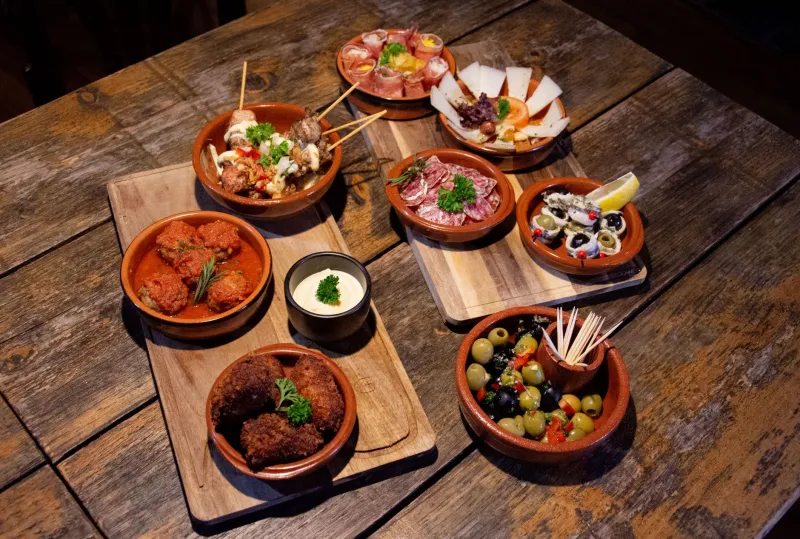
Let's be honest about something that doesn't get said enough in food content: a beautiful table can absolutely lie to you.
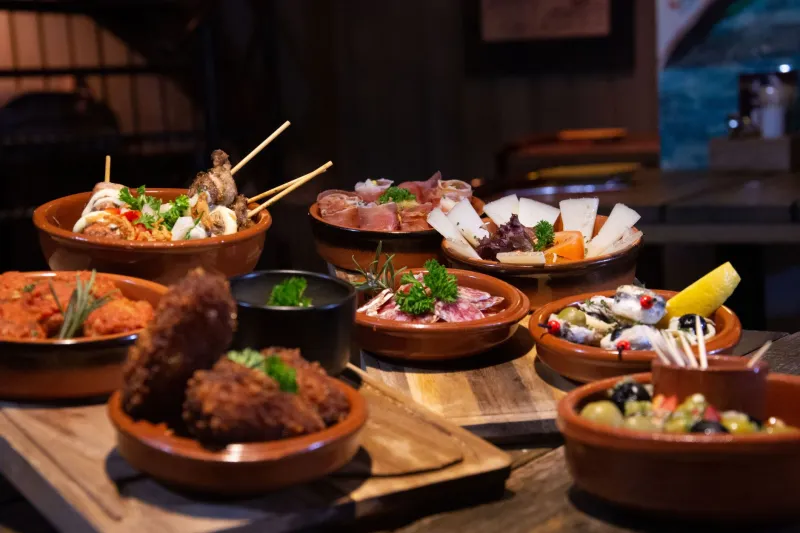
You've seen the photos — slate boards loaded with jamón, geometric arrangements of olives, tiny ramekins of aioli positioned with the precision of a jeweler. It looks incredible. It photographs like a dream. And then you eat it, and something feels... off. Not bad, exactly. Just hollow. Like the meal was designed for an audience that wasn't hungry.
That's the tapas aesthetic trap, and if you've hosted more than a couple of Spanish-inspired spreads in the US, there's a decent chance you've fallen into it at least once.
How We Got Here
Spanish tapas culture didn't start as something you'd photograph. It started as something you'd argue over. The original spirit — small plates arriving at a bar, shared without ceremony, washed down with cold wine and loud conversation — was about momentum and pleasure, not composition.
What happened in America is a familiar story. A beautiful food tradition arrived, got filtered through restaurant marketing, and then got filtered again through social media. By the time it landed in the average home kitchen, the aesthetic had become the point. Chasing the look of a tapas spread became its own project, separate from — and sometimes actively working against — the goal of feeding people something genuinely delicious.
The result is a particular kind of entertaining disappointment: the spread that looks like it belongs in a magazine but eats like a collection of expensive afterthoughts.
The Expensive Ingredient Problem
One of the clearest signs that aesthetics have taken over is the grocery list.
When you're building a tapas spread around how it looks, you end up reaching for ingredients that photograph well rather than ingredients that taste well together. Manchego in three different ages because the varied textures look interesting on a board. Imported tinned fish you've never actually tasted before because the packaging is gorgeous. Microgreens that wilt in twenty minutes but add a certain editorial flair in the meantime.
None of these are bad ingredients. Some of them are genuinely excellent. But buying them for visual reasons rather than flavor reasons means you're spending real money — tapas spreads can run surprisingly expensive — on a collection that doesn't have any internal logic. There's no conversation happening between the components. Everything is just... present.
Spanish bartenders have a phrase for a spread that works: it moves. Meaning each bite creates an appetite for the next one. Salty leads to creamy leads to bright leads to rich. The meal has direction. When you build around aesthetics, you end up with a spread that sits there looking gorgeous and going nowhere.
The Preparation Spiral
The visual-first approach doesn't just cost more money. It costs more time, and it costs it in the wrong places.
Chasing a restaurant-worthy presentation means spending an hour on garnishes, sourcing specialty boards, hunting down matching ramekins, and carefully reading up on how professional stylists arrange charcuterie. That's an hour you didn't spend tasting your aioli, adjusting your romesco, or figuring out whether your olives actually need a hit of orange zest and fresh thyme (they probably do).
The cruel irony is that the most visually impressive spreads often require the least actual cooking — lots of arranged purchased items, very little heat — while the most flavorful tapas experiences tend to involve a few warm, slightly messy dishes that photograph terribly and taste extraordinary. Patatas bravas fresh out of the pan don't hold a photogenic pose for long. But they'll make your guests forget they were ever looking at their phones.
Flavor Has a Framework
Here's the reframe that changes everything: instead of building your spread around what it looks like, build it around how it moves.
Start with something cold and salty to get people drinking — good olives, a few slices of cured meat, maybe some salted Marcona almonds. Then bring in something creamy and mild to slow things down — a simple tortilla española, or white beans dressed with olive oil and garlic. From there, add brightness: a vinegar-dressed vegetable, pickled peppers, anything with acidity that cuts through the richness. Finally, land on something warm and deeply savory that makes everyone lean in.
This is the actual architecture of a traditional tapas experience. It's not complicated, and it doesn't require a single piece of slate or a single artfully placed sprig of rosemary. What it requires is tasting as you go and thinking about the sequence of flavors rather than the final visual.
When you build this way, something interesting happens: the spread starts to look better anyway. Not because you tried to make it look good, but because food that's been thought about with care tends to have a natural visual coherence. The colors and textures fall into place when the flavors do.
The Social Experience You're Actually After
There's a deeper issue underneath all of this, and it's worth naming directly.
The reason tapas culture resonates with Americans isn't really the food — or at least, it's not only the food. It's the promise of a certain kind of gathering. Loose, unhurried, conversational. A table where nobody's waiting for their entrée and everyone's already in the middle of something good. That's the experience people are trying to recreate when they build a tapas spread at home.
But a spread optimized for photography works against that experience almost by design. It creates a moment of arrival — everyone admires the table, someone takes a photo — and then a long, flat middle where the conversation has to fight against the fact that the food isn't really pulling anyone in.
Flavor is what sustains the social experience. A bite that surprises you makes you want to talk about it. A warm dish arriving mid-gathering shifts the energy. A glass of Txakoli that someone didn't expect actually does something to the room. These are the moments that make a gathering feel alive, and none of them show up in a flat lay.
A Practical Shift
None of this means you need to abandon any interest in how your table looks. Presentation matters, and there's nothing wrong with wanting your home to feel welcoming and considered. The shift is simply one of sequence: flavor first, aesthetics second.
Taste everything before it goes out. Build your spread with a progression in mind. Spend your prep time on the dishes that benefit most from attention rather than the garnishes that benefit most from a camera. And let a couple of things be warm and slightly imperfect, because those are almost always the dishes your guests remember.
The Instagram spread will still get its photo. It'll just also be worth eating.