Less Is More: The Spanish Philosophy That Will Change How You Think About Tapas
There is a particular kind of ambition that takes over when Americans encounter tapas for the first time. You see the small plates, the communal energy, the way everything looks effortlessly beautiful on a crowded Spanish bar counter — and your brain immediately starts problem-solving. What if we added a truffle aioli? What if we dehydrated the tomato instead of just slicing it? What if we layered in a miso glaze for depth?
This instinct is understandable. American food culture rewards complexity. Our cooking shows celebrate technique. Our restaurant menus describe dishes in four-line paragraphs. More components equal more thought, and more thought equals more respect.
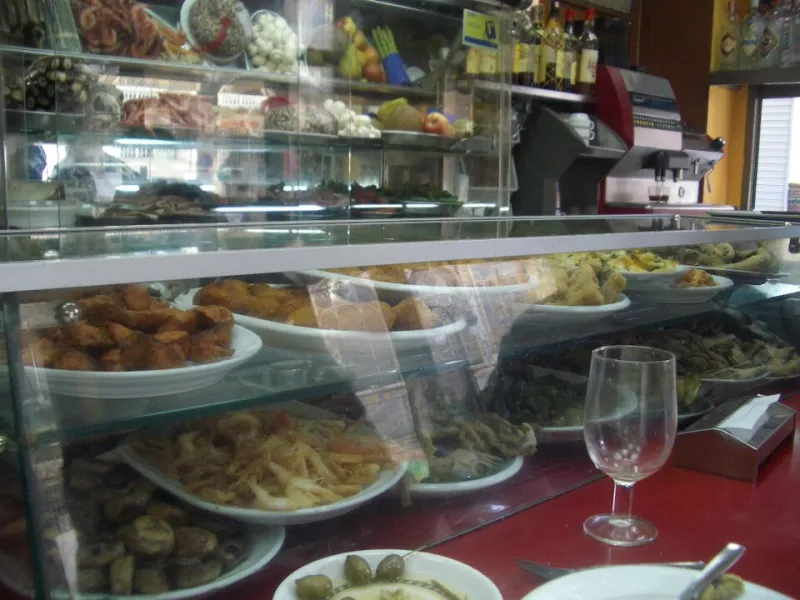
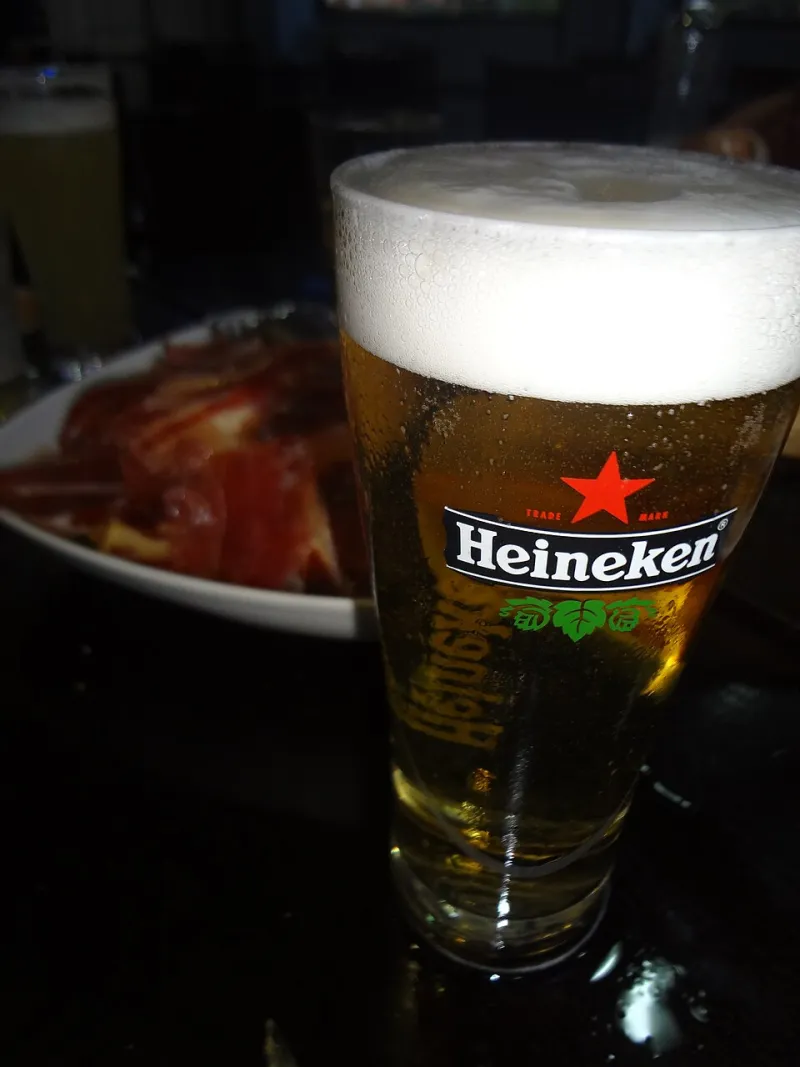
But walk into any neighborhood bar in Seville or San Sebastián and order a plate of jamón, and what arrives is exactly that — jamón. Maybe a little bread on the side. No microgreens. No foam. No reduction drizzled in a perfect spiral. Just the meat, at room temperature, doing exactly what it was always going to do: tasting extraordinary.
That gap between the Spanish approach and the American one is where a lot of home cooks lose the plot.
The American Upgrade Reflex
Food culture in the US has spent decades training us to believe that a dish without a twist is a missed opportunity. It shows up everywhere — in the "elevated" mac and cheese that replaces cheddar with gruyère and truffle oil, in the burger that stacks on jalapeño jam and fried shallots because a plain cheeseburger feels lazy.
Bring that mindset to tapas and you get patatas bravas with three different sauces, a smoked paprika foam, and a scattering of crispy capers. It photographs beautifully. It might even taste good. But it has fundamentally abandoned the point.
Spanish tapas were never designed to showcase a chef's range. They were designed to accompany a drink, to fill a gap between work and dinner, to give people something to reach for while they talked. The food was supposed to be good enough that nobody needed to discuss it. The conversation was the main event.
When a dish demands attention — when it requires explanation or admiration before you can eat it — it has already failed as a tapa.
What Spanish Chefs Actually Think About
Speak to chefs who grew up cooking in Spain and a consistent theme emerges: the hardest skill in tapas is restraint, and it takes years to develop.
The reasoning is almost counterintuitive to American sensibilities. Adding ingredients is easy. Subtracting them requires confidence. To put a single slice of Manchego on a plate with a drizzle of good honey and call it done, you have to trust the cheese completely. You have to know, without any backup plan, that the ingredient can carry the moment.
This is why the Spanish obsession with sourcing is so intense. When the olive oil is exceptional, you do not need to build a sauce around it — you pour it over bread and stop there. When the anchovies come from the right waters and have been cured correctly, they do not need a bed of whipped ricotta to justify their place on the table. Quality ingredients are not a starting point in Spanish cooking. They are the entire argument.
The complexity, in other words, happens before the cooking begins. It happens at the market, at the specialty shop, in the decision to spend a little more on the right tin of seafood or the right wedge of aged cheese. Once those decisions are made well, the kitchen work becomes almost embarrassingly simple.
A Framework for Knowing When to Stop
So how do you train yourself to pull back when everything in your cooking instincts is telling you to add more? A few questions worth asking before you reach for the next ingredient:
Does this addition change the flavor, or just the appearance? If the answer is mostly the latter, skip it. Tapas are not plating exercises.
Can you taste the main ingredient on its own and feel satisfied? If the answer is no, the problem is the ingredient, not the recipe. No amount of garnish will fix a mediocre anchovy.
Would a person eating this at a Spanish bar recognize what they were eating? If the dish requires a description to make sense, it has probably drifted too far from its roots.
Are you adding this because it makes the dish better, or because it makes you feel more like a cook? That second motivation is the one to watch. It is surprisingly common, and it produces a lot of unnecessarily busy plates.
The Dishes That Prove the Point
Consider pan con tomate — bread rubbed with garlic, tomato, and olive oil, finished with salt. That is the whole recipe. No toppings, no layering, no technique beyond the rubbing. It is one of the most satisfying things you can eat, and it works entirely because each component is chosen carefully and nothing is asked to be more than it is.
Or consider a classic Spanish tortilla. Eggs, potato, onion, olive oil, salt. American recipes for tortilla frequently start adding things — chorizo, peppers, cheese, herbs. And while some of those variations are genuinely good, the original does not need them. The restraint is what makes it iconic.
Patatas bravas at their best are fried potatoes with a spicy tomato sauce and sometimes alioli. The potatoes need to be properly fried — crisp outside, soft inside — and the sauce needs to have real heat and real acidity. Nail those two things and you have one of the great bar snacks in the world. Start deconstructing the sauce into components or swapping in sweet potato for visual contrast and you are solving a problem that did not exist.
Bringing This Home
For American home cooks, the practical takeaway is less about learning new techniques and more about unlearning a few habits.
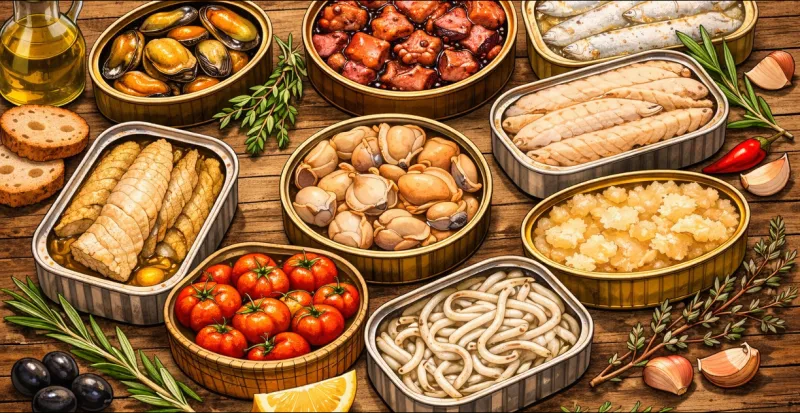
Start shopping differently. Find a good Spanish grocery or specialty food store and spend time in the tinned fish and charcuterie sections. Buy one exceptional thing — a jar of white anchovies, a vacuum pack of Ibérico, a tin of piquillo peppers — and let that ingredient be the dish. Resist the urge to build around it.
Cook fewer things per gathering, not more. A tapas spread of four genuinely excellent plates beats a spread of ten plates where the quality got diluted by ambition. Your guests will eat more slowly, talk more, and remember the meal longer.
And when you feel the pull to add one more element, ask yourself honestly: is this for the dish, or is it for you? The Spanish figured out a long time ago that the answer to that question changes everything.
Simplicity is not a shortcut. In the tapas tradition, it is the whole philosophy — and it is a harder one to master than any technique you will find in a cookbook.