The Spanish Pantry Playbook: How Canned and Jarred Ingredients Turn Any Night Into Tapas Night
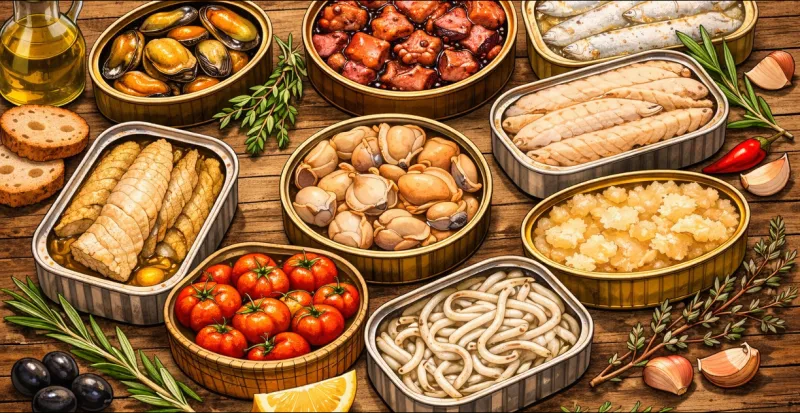
Photo: Spanish conservas tinned seafood pantry ingredients rustic flat lay, via cookdom.blog
There's a food culture myth that great cooking requires fresh everything. Spain has been quietly disproving it for centuries.
Long before refrigeration, Spanish coastal towns were perfecting methods of preserving the sea's best catches — packing anchovies in salt, marinating mussels in escabeche, sealing razor clams in olive oil. The result wasn't just food that lasted; it was food that improved. The preservation process concentrates flavor, tenderizes texture, and creates something that a freshly cooked ingredient simply can't replicate. Today, Spain's conservas (preserved foods) industry is considered among the finest in the world, and the best products command prices that reflect that.
For American home cooks, this tradition is one of the most practical gifts a food culture has ever offered. A well-stocked Spanish pantry means you're perpetually thirty minutes away from a tapas board that could pass for restaurant quality — no special trip to the market required.
What Actually Goes in a Spanish Pantry
Let's be specific, because "stock up on Spanish stuff" isn't a grocery list.
Conservas de Marisco (Tinned Seafood) This is the crown jewel of the Spanish pantry. At its best, conservas de marisco includes:
- Almejas en salsa de vieira — clams in scallop sauce, intensely briny and rich
- Mejillones en escabeche — mussels marinated in a vinegar-and-spice brine that makes them almost meaty
- Navajas — razor clams in olive oil, which taste like the ocean distilled into a tin
- Anchoas del Cantábrico — Cantabrian anchovies, the gold standard, fat and mellow and nothing like the tinny pizza anchovies most Americans grew up with
Brands to look for in the US: Ortiz is widely available at Whole Foods and specialty retailers and represents excellent quality for the price point. Ramón Peña and Conservas Güeyu Mar are worth hunting down online for special occasions — the latter is particularly beloved by chefs. For a budget-friendly entry point, King Oscar sardines aren't Spanish but they're a solid starting place if you're new to tinned fish.
Piquillo Peppers These small, sweet-hot peppers from Navarra are roasted and packed in their own juices. What comes out of the jar is silky, smoky, and deeply savory — nothing like a bell pepper. They're versatile enough to serve straight from the jar draped over good bread, blend into a romesco sauce, or stuff with cream cheese and a little crab for a two-minute tapa that looks genuinely impressive.
Look for: Matiz brand is easy to find at Cost Plus World Market and online. Roland is a more budget-accessible option at many grocery chains.
Jarred Olives Not the canned black olives from the pizza aisle. Seek out manzanilla olives from Seville, gordal ("queen" olives, fat and buttery), or arbequina olives, which are small and fruity. Warming them briefly in a pan with olive oil, a strip of orange peel, and a sprig of fresh thyme takes them from snack to something genuinely special.
Bomba Rice and Paella Ingredients Not strictly a conserva, but a pantry essential. Bomba rice — available from La Bomba and Calasparra brands — absorbs more liquid than regular short-grain rice without turning mushy, which is what makes a proper paella work. Keep a bag on hand.
Smoked Paprika (Pimentón de la Vera) This deserves its own mention because it's one of the most transformative spices in any kitchen. The smoked variety from the La Vera region of Extremadura adds a depth that regular paprika simply doesn't have. La Dalia and El Rey are reliable brands. A pinch of this in olive oil, drizzled over anything from hummus to roasted potatoes, immediately signals "Spain."
The Thirty-Minute Tapas Board
Here's how a well-stocked Spanish pantry actually plays out on a Thursday night when you have friends coming over and no bandwidth for a cooking project.
Open a tin of Ortiz anchovies and lay them over pan con tomate (see our weeknight tapas guide). Drain a jar of piquillo peppers, tear them roughly, and dress with olive oil and a pinch of smoked paprika. Warm a bowl of manzanilla olives with orange peel. Open a tin of mejillones en escabeche and serve them directly in the tin with toothpicks — this is genuinely how they're eaten in Spanish bars, and the presentation is charming rather than lazy. Slice a wedge of manchego. Put out some marcona almonds.
That's six components. Total active time: maybe fifteen minutes. The result looks like a curated tapas spread because it is one.
Plating Ideas That Elevate the Humble Tin
Part of what makes Spanish conservas feel special in a restaurant context is presentation. A few ideas:
- Serve tinned fish in the tin itself, opened and placed on a small wooden board. This is authentic and visually interesting — the graphics on quality Spanish tins are often beautiful.
- Layer textures: razor clams on a crispy toast, piquillo peppers alongside creamy cheese, mussels next to something crunchy like a grissini.
- Use the oil: the liquid in quality conservas is often seasoned olive oil that's been infused with the flavor of whatever's packed in it. Pour it over bread, drizzle it on a plate as a sauce, or use it to dress a quick salad.
- Small bowls and slate boards do a lot of visual work. Group items by color and height rather than spreading everything flat.
Where to Shop in the US
Spanish pantry ingredients have become significantly more accessible in the last five years. Beyond Whole Foods and specialty retailers, La Tienda (tienda.com) is the most comprehensive US-based Spanish food retailer, offering everything from Ibérico ham to conservas to pimentón. Amazon carries most major brands. In cities with large Spanish or Latin communities — Miami, New York, Los Angeles, Chicago — local Spanish delis and import shops often stock regional brands you won't find anywhere else online.
If you're just starting to build your pantry, begin with three things: a tin of good anchovies, a jar of piquillo peppers, and a tin of smoked pimentón. Those three ingredients alone will change the way you cook — not just Spanish food, but everything.
The Bigger Picture
There's something philosophically appealing about the Spanish approach to preserved food. It's the opposite of food culture anxiety — no pressure to use everything fresh, no guilt about a weeknight shortcut. Quality preserved ingredients are the point, not a compromise. Spain figured out a long time ago that the best food doesn't require the most effort. It requires the best ingredients, treated with respect.
That's a lesson worth bringing home.