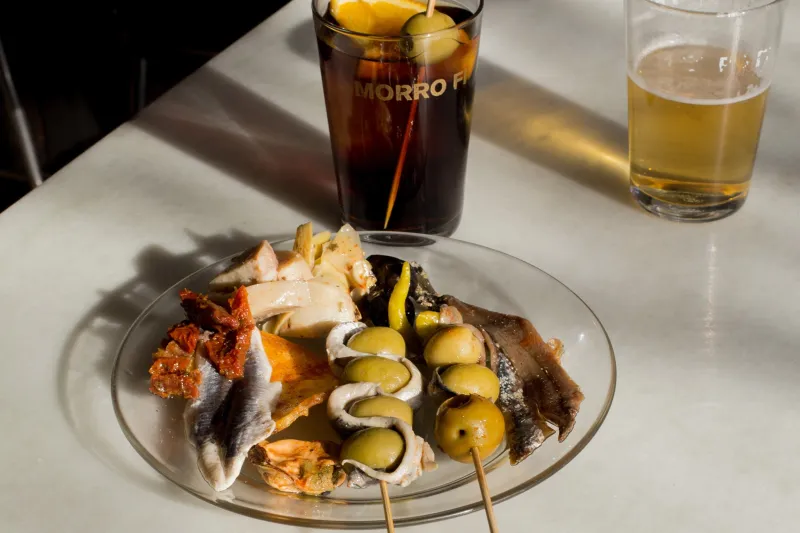
When Miso Meets Manchego: The Spanish Chefs Blending Global Flavors Into the Tapas Tradition

Photo: Dietmar Rabich, CC BY-SA 4.0, via Wikimedia Commons
For most Americans, tapas means a specific set of images: a cast-iron pan of bubbling garlic shrimp, a wooden board of jamón, maybe a tortilla española cut into wedges. Those dishes are real, they're delicious, and they're not going anywhere. But walk into the right restaurant in San Sebastián, Madrid, or Valencia today — or, increasingly, in cities like Miami, Los Angeles, and Brooklyn — and you'll find something that doesn't fit neatly into that picture.
You might find a crispy croqueta filled not with jamón but with kimchi and smoked pork. A pil-pil sauce made with dashi instead of fish stock. A ceviche plated with the precision of a pintxo. The form is Spanish. The flavors are from somewhere else entirely.
This is modern Spanish fusion — and it's one of the most exciting things happening in food right now.
Spain Was Always Borrowing
Before we call this a revolution, it's worth remembering that Spanish cuisine has always been a product of cultural exchange. The Moors brought almonds, saffron, and citrus to the Iberian Peninsula. The Americas contributed tomatoes, peppers, and potatoes — ingredients so foundational to Spanish cooking today that it's almost impossible to imagine the cuisine without them. Patatas bravas without the potato? Gazpacho without the tomato? These were once foreign imports too.
What today's chefs are doing is simply continuing that tradition of absorption and adaptation — but faster, and with a wider global reach than any previous generation had access to.
"Spanish technique is incredibly precise," says Chef Marcos Alvarado, who runs a modern tapas concept in Miami's Wynwood neighborhood. "When you apply that precision — the emulsification, the temperature control, the obsession with texture — to ingredients from Japan or Peru or Morocco, something new happens. It's not confusion. It's conversation."
The Asian Influence: Umami Meets the Mediterranean
Of all the global influences showing up on modern tapas menus, Japanese ingredients have arguably found the most natural home in Spanish cooking. The connection makes a kind of intuitive sense: both cultures share a deep reverence for preserved and fermented foods, a fixation on ingredient quality over technique complexity, and a love of small, intensely flavored bites.
Miso, in particular, has become a quiet favorite among Spanish chefs. Its deep umami richness mirrors the savory depth of aged Manchego or cured jamón, which means it integrates without disrupting. A miso-glazed presa ibérica (a prized shoulder cut of Iberian pork) plays on the natural sweetness of the meat in ways a traditional sherry reduction does too — just with a different cultural accent.
Yuzu has similarly found its way into Spanish kitchens, showing up in alioli variations, in citrus-cured fish dishes, and as a finishing note on ceviche-style preparations that blur the line between Spanish escabeche and Japanese ponzu.
Try it at home: Replace the lemon juice in your classic alioli with a 50/50 blend of yuzu juice and lemon. The result is floral, slightly more complex, and pairs beautifully with grilled vegetables or fried fish.
Latin America Comes Full Circle
There's a poetic irony in the fact that Latin American flavors are now influencing Spanish cuisine. For centuries, the exchange ran the other direction — Spanish colonizers carried their food traditions to the Americas, where they were transformed by indigenous ingredients and techniques. Now those hybrid traditions are looping back.
Aji amarillo, the bright Peruvian pepper with its fruity heat and vivid orange color, has become a go-to ingredient for Spanish chefs looking to add complexity without overwhelming a dish. It shows up in sauces alongside romesco, in marinades for grilled seafood, and occasionally as a subtle addition to salmorejo — the thick Andalusian tomato soup — lending it a gentle warmth that feels both foreign and completely at home.
Chef Elena Fuentes, who trained in Seville before opening her tapas bar in Brooklyn's Cobble Hill neighborhood, has built an entire section of her menu around what she calls "Atlantic crossings" — dishes that trace the historical movement of ingredients between Spain and the Americas.
"My croquetas are made with a base of sofrito that includes aji panca and smoked paprika together," she explains. "It sounds like a small change, but the depth you get is completely different. People think they're eating something traditional. They are — just a tradition that's still being written."
Middle Eastern Threads
The influence of Moorish cuisine on Andalusian cooking is well-documented, but contemporary Spanish chefs are going further — drawing directly from modern Middle Eastern and North African traditions rather than just their historical echoes.
Harissa has become a natural companion to patatas bravas sauce in some kitchens, adding a smoky, rose-petal complexity that standard chili doesn't offer. Preserved lemon — a staple of Moroccan cooking — brings a fermented brightness to gambas al ajillo that makes the dish feel simultaneously classic and completely new. Za'atar, the dried herb blend ubiquitous across the Levant, has found its way onto flatbreads served alongside jamón, creating a flavor pairing that shouldn't work but absolutely does.
At its best, this kind of cross-cultural cooking isn't about novelty. It's about rediscovering connections that history already made — and following them somewhere interesting.
Three Fusion Tapas to Make at Home
You don't need a professional kitchen or a culinary degree to experiment with these ideas. Here are three starter recipes that blend Spanish foundations with global accents:
Miso-Glazed Jamón Croquetas Make your standard béchamel-based croqueta filling, but stir in one tablespoon of white miso paste along with your jamón. The miso deepens the savory quality of the ham without announcing itself. Form, bread, and fry as usual. Serve with a simple aioli spiked with a few drops of sesame oil.
Patatas Bravas with Harissa Romesco Blend your standard romesco sauce (roasted red peppers, almonds, garlic, vinegar) with one tablespoon of harissa paste. The heat and floral complexity of the harissa turns a familiar sauce into something richer and more layered. Spoon generously over crispy fried potatoes.
Yuzu-Cured Salmon Pintxos Cure thin slices of salmon in a mixture of salt, sugar, lemon zest, and yuzu juice for 20 minutes. Layer onto toasted baguette rounds with a thin smear of cream cheese, a sliver of pickled cucumber, and a tiny pinch of togarashi. The result is a pintxo that feels like it belongs equally in San Sebastián and Tokyo.
Why This Matters Beyond the Menu
The broader story here isn't just about food. It's about what happens when a cuisine secure enough in its own identity opens its arms to outside influence. Spanish cooking — with its emphasis on quality ingredients, its respect for technique, and its fundamentally social nature — turns out to be an extraordinary host for global flavors.
For American diners, this evolution is especially exciting. We've always been drawn to Spanish food for its warmth and generosity. Watching it absorb the world's pantry while staying recognizably itself feels like watching something genuinely alive.
The tapas tradition was never about keeping things small. It was about keeping things shared. That, at least, hasn't changed.