You're Eating Tapas Wrong — And It's Not Entirely Your Fault
The Invisible Menu Nobody Told You About
There's a moment that happens in tapas restaurants across America, and if you've been to one, you've probably lived it. The table orders patatas bravas, some jamón croquetas, maybe a plate of marinated olives. The food arrives fast, it disappears faster, and then someone at the table asks the question that gives the whole game away: "So what are we actually getting for dinner?"
That question — innocent as it sounds — reveals everything. It tells you that the person asking has mentally filed tapas under "appetizers," a warm-up act before the headliner shows up. And honestly? You can't blame them. American dining culture has spent decades training us to think in a very specific sequence: starter, entrée, dessert. Tapas don't fit that sequence. They're not supposed to.
The result is a kind of cultural mismatch that leaves a lot of people vaguely unsatisfied — not because the food was bad, but because they were eating it with the wrong expectations entirely.
What Tapas Actually Are (Spoiler: It's Not About the Food)
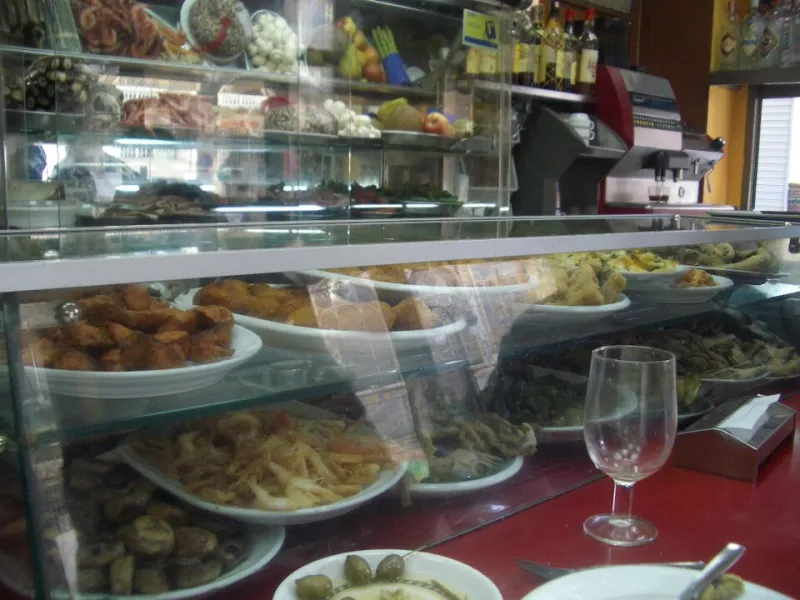
In Spain, tapas aren't a food category. They're a social format. The small plates are almost secondary to what's really happening, which is a long, unhurried stretch of time spent with people you like, punctuated by bites of good food and sips of cold wine or beer.
The classic Spanish evening might involve hitting two or three different bars — each one known for a specific dish — moving through the night at a pace that has nothing to do with efficiency and everything to do with enjoyment. You don't sit down hungry and leave full. You arrive, you graze, you talk, you move on. The satisfaction is cumulative and social, not delivered in one concentrated entrée-sized hit.
That's a fundamentally different relationship with food than most Americans grow up with. We tend to treat eating as a task with a beginning, middle, and end. You show up hungry, you eat until you're not, you leave. Tapas culture asks you to stretch that arc out, to stay in the middle for a while, to let the meal breathe.
Why the Appetizer Framing Keeps Winning
Here's what makes the appetizer mindset so sticky: it's not entirely wrong, historically speaking. The word tapa literally refers to a small bite — often a piece of bread or a slice of cured meat — that was placed on top of a glass of wine to keep flies out. Something to nibble on while you drank. So yes, the origin story does involve a small thing you eat before or alongside a drink.
But somewhere along the way, that small thing became the whole point. The drink became part of a longer evening. The nibble multiplied into a spread. And the bar became a gathering place where the eating and drinking and talking were all happening at the same time, not in sequence.
American restaurants, trying to translate this for a market that expects a certain dining structure, often end up serving tapas as fancy starters. The menu is built that way. The pacing is built that way. And so customers eat accordingly — ordering four small plates and then wondering why they're hungry an hour later, not realizing they ordered an appetizer course and skipped everything else.
The Reframe That Changes Everything
So how do you actually shift your thinking? It starts before you even sit down.
Instead of approaching a tapas meal with an entrée-sized hunger that needs to be addressed and resolved, try arriving with a different kind of appetite — one that's as much about the experience as the food. You're not there to eat dinner. You're there to spend time at a table, and the food is how you mark that time.
Practically speaking, this means a few things:
Order in rounds, not all at once. In Spain, you don't put in a massive order and wait for everything to land. You order a couple of dishes, eat them, talk, order a couple more. The meal evolves. You discover what you're in the mood for as the evening goes on. Trying to front-load the whole thing kills that rhythm.
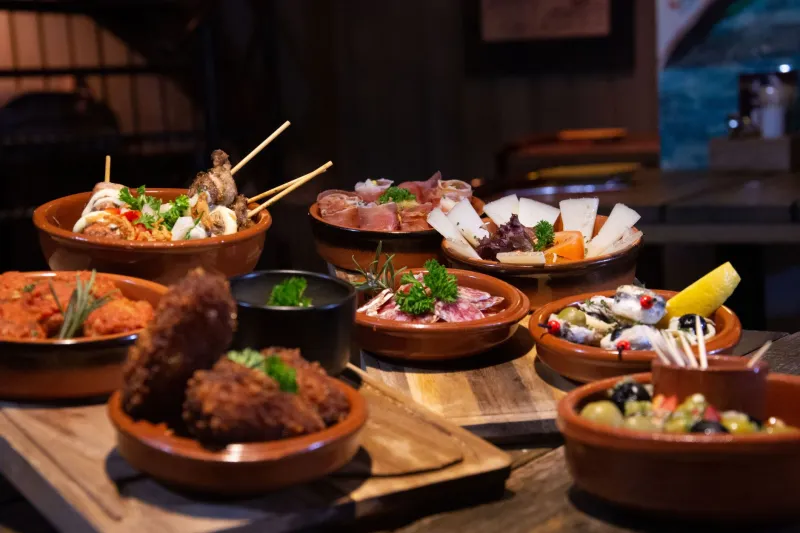
Let the plates overlap. There's no rule that says you finish one dish before the next arrives. Spanish bar culture is comfortable with a table that has three or four things on it at once, everyone reaching across, sharing, combining bites in unexpected ways. Lean into that.
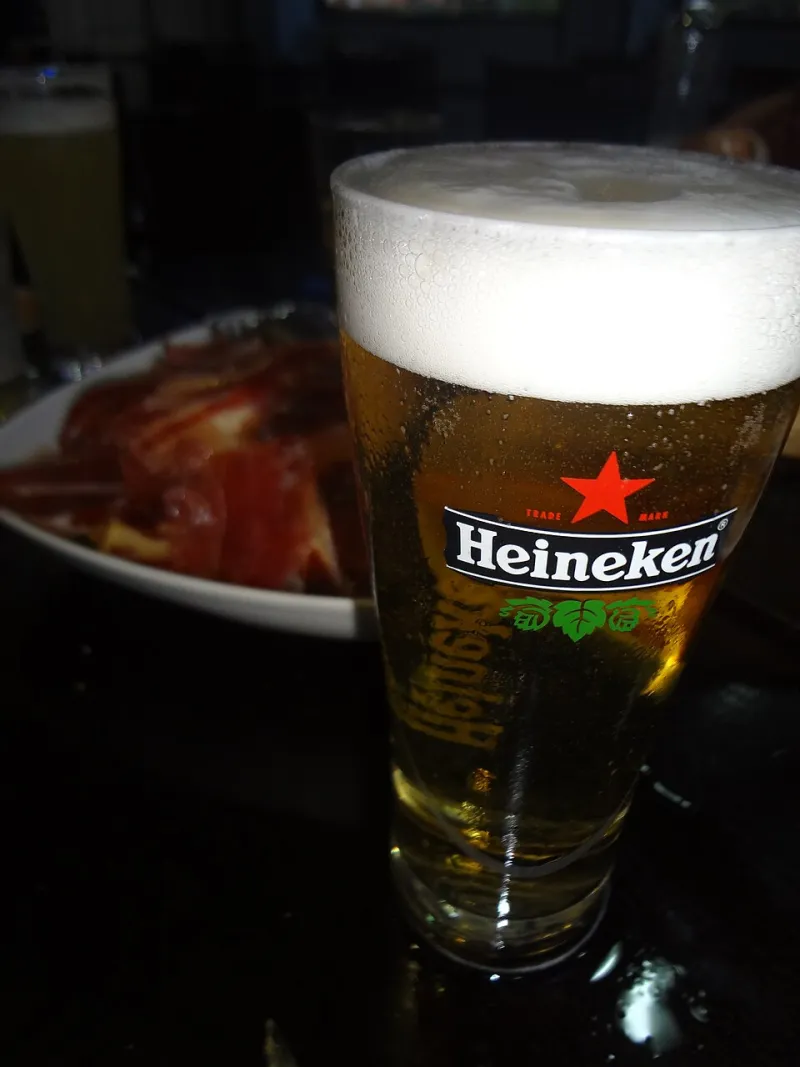
Drink alongside, not before. A glass of Albariño or a cold Estrella isn't a precursor to the meal — it's part of it. The food and the drink are in conversation with each other throughout the evening, not arranged in a hierarchy.
Count plates differently. A good rule of thumb for a satisfying tapas meal: three to four dishes per person if you're ordering generously, two to three if the plates are substantial. That sounds like a lot until you remember you're not getting an entrée on top of it. This is the entrée. All of it, together.
What You Gain When You Finally Get It
Once the appetizer framing falls away, something genuinely different happens at the table. The meal stops being a delivery mechanism for calories and starts being an actual shared experience. You're not waiting for your food to arrive so you can eat it and be done. You're in the middle of something that's already happening.
Conversations go longer. People try things they wouldn't have ordered for themselves. The table develops its own logic — someone keeps reordering the croquetas, someone else is campaigning for the anchovies, and somehow that negotiation becomes part of the fun.
This is what Spanish bartenders and home cooks have understood for generations: the meal isn't the point. The meal is the excuse. And small plates, passed around a table with no particular agenda, are just about the best excuse there is.
Next time you sit down to tapas, try resisting the urge to figure out what you're really having for dinner. You might be surprised to find that what's already on the table is more than enough — and more satisfying than anything that could have followed it.