You've Got the Food Right — Here's Everything Else You're Getting Wrong About Spanish Tapas Culture
Let's be honest. You've done the research. You've sourced the Manchego, tracked down proper pimentón, and watched enough cooking videos to feel confident about your croquetas. The food? Solid. Maybe even genuinely good.
And yet — something's off. The night feels more like a themed dinner party than a real tapas experience. The vibe you were chasing, that loose, unhurried, somehow-electric atmosphere you remember from a trip to Spain or saw in a documentary — it never quite shows up.
Here's the thing: you haven't been cooking the wrong food. You've been missing the entire cultural scaffolding that makes tapas tapas.
Tapas Was Never Really About the Food
This might sting a little, but stay with it. In Spain, the food is almost secondary. That sounds absurd coming from a food website, but it's true in the most important way — tapas culture is fundamentally a social technology. It exists to facilitate conversation, movement, and connection. The small plates just happen to be delicious.
The Spanish concept of el tapeo — the act of going out for tapas — is built around movement. You don't plant yourself at one bar and graze through an entire menu. You have one or two things, maybe a glass of wine or a caña of beer, and then you move. You walk a few blocks. You find the next place. You run into someone you know on the street. You argue about where to go next. That walking, that looseness, that lack of a fixed plan — that's the experience.
In most American interpretations, we take all of that and compress it into a single location, a single table, and a predetermined menu. We've essentially turned a roaming street-level ritual into a seated dinner with smaller portions. No wonder it doesn't feel the same.
The Bar Is the Point, Not the Backdrop
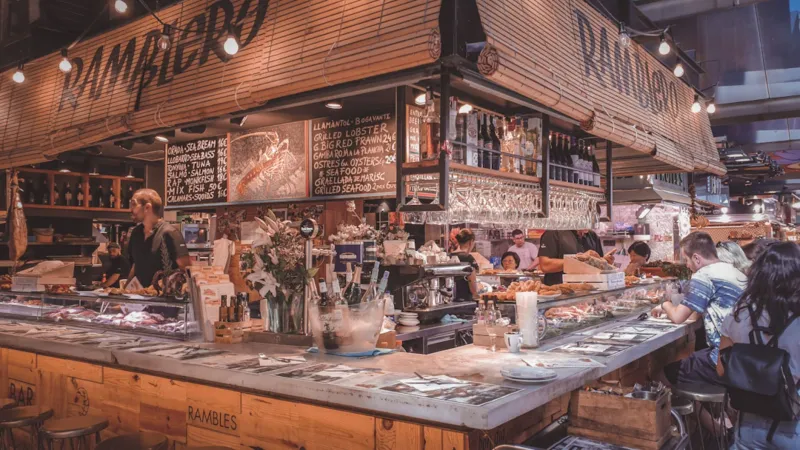
Walk into a traditional tapas bar in Seville or San Sebastián and you'll notice something immediately: most people are standing. Not because there aren't seats, but because standing at the bar is the way to do it. You're closer to the action. You can watch the bartender work. You can lean over and ask what's good today. You can catch the eye of the person next to you and start talking.
The bar in Spanish culture isn't just a place to order drinks — it's a social equalizer. The bartender functions almost like a host, a guide, and occasionally a gatekeeper. They know their regulars. They'll steer you toward the thing that just came out of the kitchen. They'll tell you, without embarrassment, when you've ordered enough.
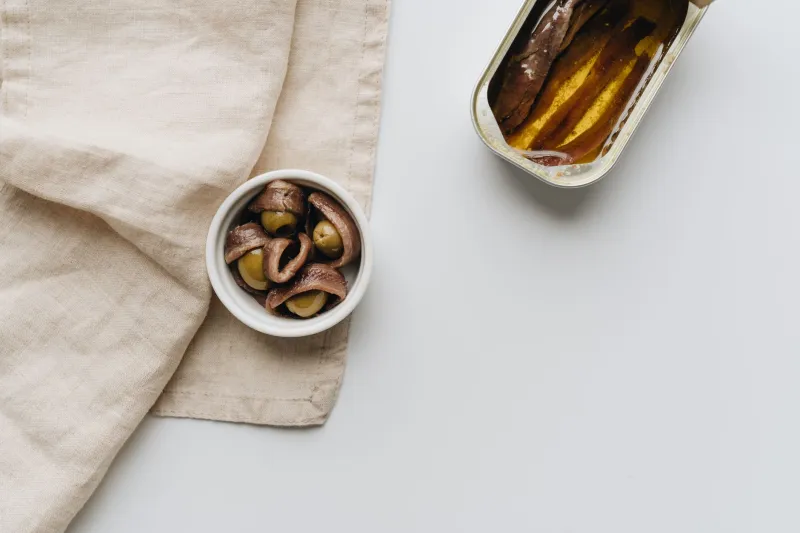
At home, we set up a buffet-style spread on the kitchen island and step back. The dynamic disappears entirely. Nobody's guiding the experience. Nobody's telling you that the anchovies are exceptional today, or that you should try the next thing before you commit to more of the last one.
Timing Is a Form of Respect
In Spain, tapas happen at specific times for specific reasons. The late afternoon aperitivo hour — roughly 7 to 9 p.m. — is when the serious bar culture kicks in. This isn't arbitrary. It's calibrated around the Spanish dinner schedule, where a proper sit-down meal might not happen until 10 or 11 at night. Tapas are the bridge, the warm-up, the social glue that holds the evening together before anyone commits to a table.
American hosts tend to either start too early (treating tapas like 6 p.m. appetizers before a main course) or try to make them the entire meal without adjusting the volume accordingly. Both approaches miss the rhythm. Tapas are designed to build — in pace, in flavor, in conversation. They're not meant to be consumed all at once, and they're not meant to satisfy a full appetite on their own unless you're deep into the evening and the plates just keep coming.
If you're hosting, try pushing your start time later than feels comfortable. 7:30 or 8 p.m. is not unreasonable. Bring things out slowly. Let people get settled and talking before the food becomes the focus.
How to Rebuild the Ritual at Home
You can't replicate a walk through the Gothic Quarter of Barcelona in your living room. But you can borrow the spirit of it.
Start with the bar mentality. Instead of laying everything out at once, keep most of the food in the kitchen and bring it out in waves. Position yourself as the guide — the person who knows what's coming next and creates a little anticipation around it. This single change does more for the atmosphere than any specific dish.
Create a standing moment. Even if your guests end up sitting eventually, start the evening with everyone on their feet, drinks in hand, near the kitchen or a designated spot. It signals that this is not a formal dinner. It loosens people up. It makes the food feel like something that's happening with the evening rather than the reason for it.
Resist the urge to over-explain. One of the quieter pleasures of a good tapas bar is that the food just arrives — you might know what it is, you might not. That small element of surprise, of trust in the person serving you, is part of the experience. You don't need to narrate every plate you bring out.
Build in a break. Midway through the evening, stop the food for twenty or thirty minutes. Let people drink, talk, breathe. This mirrors the natural pause that happens when you're walking between bars in Spain. It also resets everyone's appetite and makes the next round of food feel like a new act rather than a continuation.
Let the wine do some of the work. Spanish bar culture is inseparable from its drinks. A well-chosen Albariño or a glass of fino sherry doesn't just pair with the food — it sets the tone. If you're reaching for whatever's open, you're leaving one of the most powerful atmospheric tools on the table.
The Gap Between Aesthetic and Experience
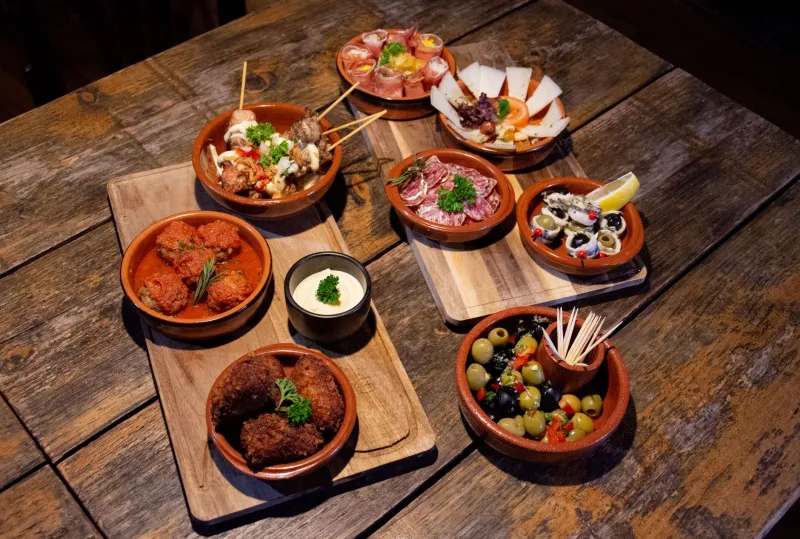
Social media has done something a little unfortunate to tapas culture in the US. It's turned the look of a tapas spread — the beautiful boards, the little ceramic dishes, the strategically placed olive branches — into the goal. And the look can be genuinely stunning. But it's a photograph of a culture, not the culture itself.
The real thing is messier, louder, more spontaneous. Napkins on the floor. Bartenders shouting across the room. Someone ordering the wrong thing and laughing about it. The beauty of authentic tapas culture is in its imperfection, its movement, its refusal to be precious about itself.
The food is the easy part. It always has been. What's harder — and more rewarding — is building the kind of evening where the food is almost beside the point. Where people are still talking at midnight not because they're waiting for more plates, but because the night itself became something worth staying for.
That's what Barcelona feels like. And with a little less planning and a little more presence, it's closer than you think.