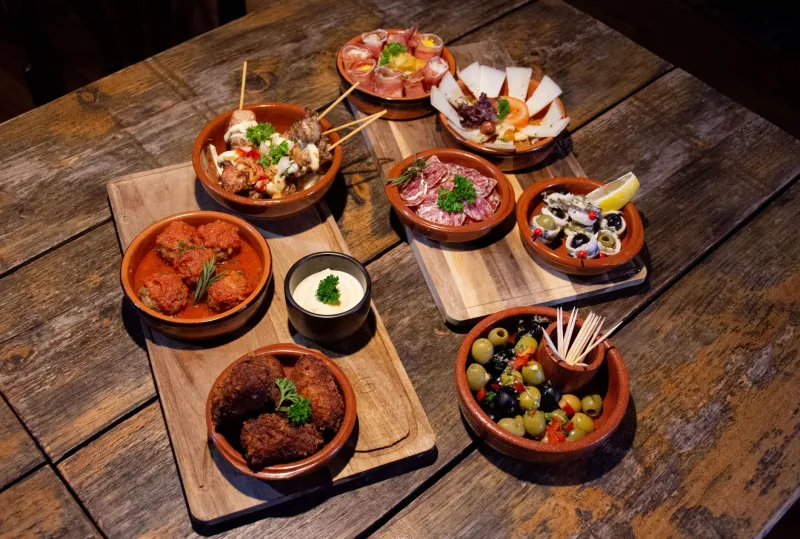
Why That Patatas Bravas Tastes Like Magic at the Bar and Just Okay at Home
You did everything right. You sourced good Spanish paprika. You used the correct olive oil. You even let the aioli rest in the fridge overnight like every recipe told you to. And when you finally plated those patatas bravas at your kitchen counter, they were... fine. Good, even. But not that. Not the version you had in Seville, or the one from that little Spanish spot in your city where the bartender barely looked at you before sliding a plate across the zinc.
Here's the uncomfortable truth: the food was probably never the main event. The bar was.
Your Brain Is Eating the Room
Sensory psychologists have a term for this — "environmental flavor enhancement" — but you don't need a research paper to understand it. You've lived it. The same glass of wine tastes richer at a candlelit table than it does under fluorescent lights. A hot dog at the ballpark is genuinely better than the same hot dog at home. Context isn't decoration. It's an ingredient.
In a Spanish bar, everything conspires to make the food taste better. The low, warm lighting softens your visual field and slows your nervous system down just enough. The ambient noise — that specific mix of clinking glasses, overlapping conversations, and the occasional burst of laughter — keeps your brain engaged without overwhelming it. You're not sitting in silence, staring at your plate and analyzing every bite. You're in something. And that immersion changes how flavor registers.
At home, especially in American homes, the default dining setup works against you. Bright overhead lighting. A table that signals "meal is happening, pay attention." Phones within reach. The mental residue of whatever happened before dinner. None of that is catastrophic on its own, but stacked together, it creates exactly the kind of self-conscious eating environment that tapas culture was never designed for.
The Standing Thing Is Not a Coincidence
If you've spent any time in a real Spanish bar, you know that a significant portion of the tapas experience happens on your feet. You're leaning against a counter, maybe half-turned toward a friend, plate balanced in one hand and a small glass of wine in the other. It feels casual because it is casual — and that casualness is doing real psychological work.
Standing while eating reduces the formality of the moment. You're not committed to a course. You can drift toward another plate, step away to talk to someone, come back. There's no implied obligation to finish what's in front of you, no social pressure to clear your portion before someone notices. That freedom changes your relationship to the food. You taste rather than consume. You linger rather than progress.
When Americans sit down to a tapas spread at a dinner table, the unconscious framing shifts. Suddenly it's a meal. There are expectations. Someone might wonder if there's enough food. The small plates that felt abundant and exciting at a bar now feel like they might not quite cover it. The psychology of the table works against the philosophy of tapas before the first bite is taken.
Strangers Are Actually Helping You Enjoy Your Food
This one sounds strange, but stick with it. In a busy bar, the presence of other people — people you don't know, people who are visibly enjoying themselves — creates a low-level social proof that shapes your own experience. When the table next to you is leaning in over a plate of jamón and reacting like it's the best thing they've ever eaten, your brain quietly files that information. The anticipation builds. The context is validated.
At home, you don't have that. It's just you and the people you already know, eating food you made, in a space you live in every day. The novelty dial is turned way down before anyone sits down. That's not a problem you can fully solve, but it's one you can work with.
Practical Moves for American Hosts
None of this means your home tapas nights are doomed. It just means the fix isn't in the recipe. Here's where to actually put your energy:
Kill the overhead lights. This is the single highest-return adjustment you can make. Swap bright ceiling fixtures for lamps, candles, or string lights. Warm, low light changes the mood of a room faster than almost anything else, and it makes food look better too — which primes your guests to taste it differently before they even pick up a fork.
Ditch the formal table setup. If your space allows it, set up a counter or kitchen island as the main serving area and let people stand, graze, and move around. If you don't have the layout for that, at least resist the urge to assign seats and plate individual portions. Keep the food communal and the arrangement loose.
Build in some noise. A Spanish bar is never quiet. Put together a playlist that has energy without demanding attention — flamenco-adjacent stuff, Spanish indie, something with rhythm that keeps the room feeling alive. Silence at a dinner party is actually uncomfortable for most people, and discomfort is not a flavor enhancer.
Serve in waves, not all at once. This is something Spanish bars do naturally because the kitchen is small and the menu is long. At home, it requires a little planning, but it's worth it. Bring out two or three plates, let people settle in, then add more. The arrival of new food creates small moments of anticipation and discovery that keep the energy of the evening moving.
Let things be imperfect on purpose. A plate that's slightly rustic, a napkin that's not folded, a wine glass that doesn't match — these aren't failures. They're signals that this is a relaxed, living moment rather than a performance. Spanish bar culture is deeply comfortable with imperfection, and that comfort is contagious.
The Real Secret Is Letting Go of the Meal
The deepest shift you can make isn't about lighting or playlist or whether you're sitting or standing. It's about releasing the idea that tapas night is a meal to be executed correctly. In Spain, a few hours at a bar isn't dinner. It's time. It's conversation that happens to involve food. The plates are punctuation, not the point.
When you host with that frame — when the goal is a good two hours rather than a complete and satisfying meal — everything loosens up. Your guests stop waiting for the main course that isn't coming. You stop worrying about whether the spread is enough. The food, freed from the pressure of being everything, gets to just be what it actually is: small, good, and meant to be shared.
That's when the patatas bravas tastes like it did at the bar. Not because the recipe changed, but because you finally stopped eating it like a meal and started eating it like a Spaniard.