That Gorgeous Board on Your Counter? It's Not Tapas — Here's What Is
The Board Is Beautiful. But Let's Be Honest.
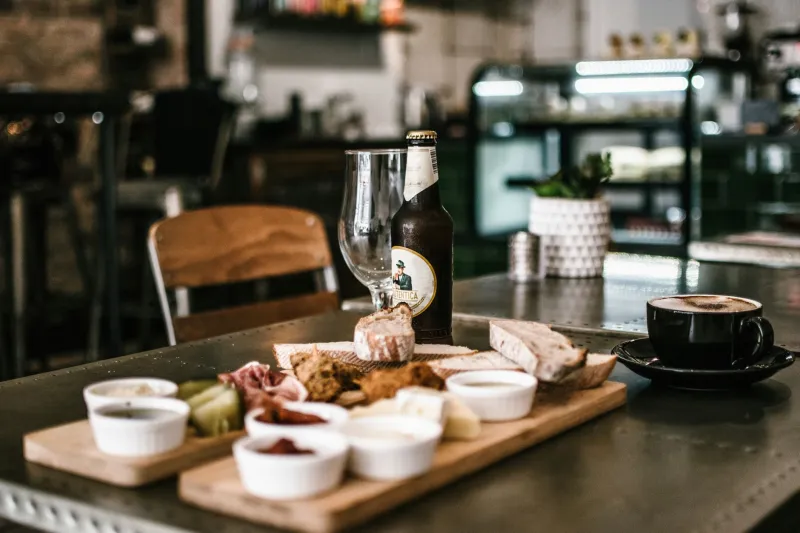
You've seen it a hundred times. Maybe you've made it yourself. A wide wooden board, fanned slices of jamón, a wedge of Manchego, some Marcona almonds, a few olives, maybe a smear of fig jam if you're feeling ambitious. You snap a photo, set it on the coffee table, and tell your guests you're doing tapas tonight.
Here's the thing: what you've made is gorgeous. It might even taste great. But it isn't tapas — at least not in any sense a Spaniard would recognize.
This isn't a food snob takedown. It's an invitation. Because once you understand what tapas actually is, a whole new way of cooking, hosting, and eating opens up — and it's honestly more fun than arranging charcuterie ever was.
How We Got Here
American food culture loves a format. Charcuterie boards exploded in the 2010s, fueled by Instagram and a broader shift toward casual, communal eating. Around the same time, "Spanish-inspired" started appearing on menus everywhere, and somewhere in the cultural blender, the two ideas fused together. Jamón replaced prosciutto, Manchego replaced Parmigiano, and the whole thing got rebranded as tapas.
It's an understandable leap. Spain does produce extraordinary cured meats and aged cheeses. They absolutely appear in tapas bars. But they appear alongside things — hot things, fried things, braised things, marinated things — as part of a moving, evolving meal. The board, by contrast, is static. You set it out, and that's the meal.
In Spain, that's called an embutido spread, or just a snack. Tapas is something else entirely.
What Tapas Actually Means
The word "tapa" literally means "lid" — and the origin story, however romanticized, involves small bites placed on top of drinks to keep flies out or to soak up alcohol. What evolved from that humble beginning is one of the most sophisticated casual dining cultures in the world.
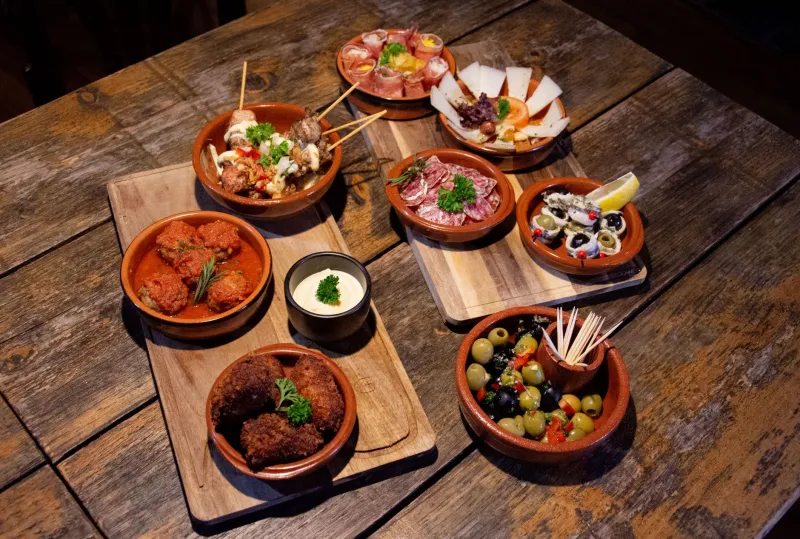
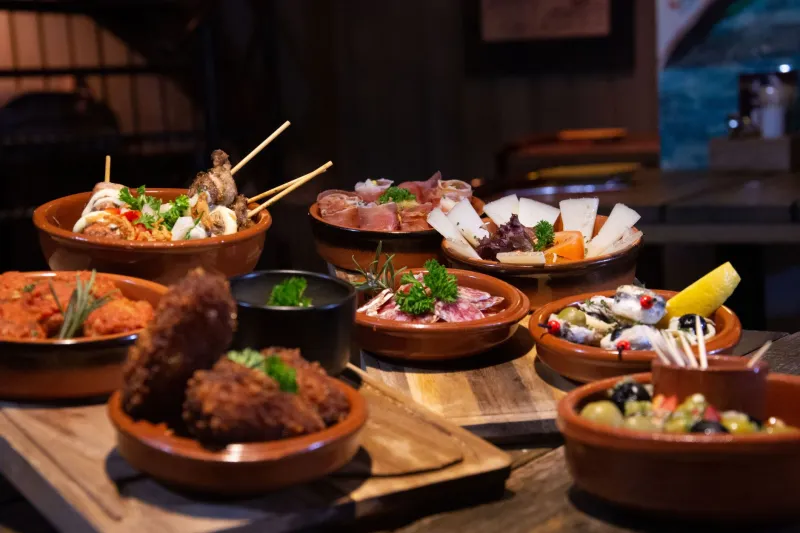
Real tapas is defined less by what's on the plate and more by how the meal moves. You order a round. You eat. You talk. You order another round — something different, something that responds to what came before. A plate of garlicky shrimp gives way to a dish of slow-cooked lentils, which gives way to a slab of tortilla española, which gives way to something fried and crispy to wake everyone back up. The meal has rhythm. It has pacing. It has intention.
The charcuterie board, as wonderful as it is, doesn't do any of that. It's all available at once, it doesn't change, and it asks nothing of you as a host except to arrange it nicely.
The Preparation Philosophy Is Completely Different
Here's where the gap really shows. A charcuterie board requires shopping and assembly. Tapas requires cooking — or at minimum, active preparation that transforms ingredients rather than just presenting them.
Consider what separates a slice of jamón on a board from that same jamón served as part of a proper tapa. In the second scenario, maybe it's draped over pan con tomate — bread that's been rubbed with ripe tomato and good olive oil, the fat from the cured meat melting slightly into the toast. That's two minutes of actual cooking that creates something entirely new. The jamón hasn't changed, but the experience of eating it has.
Or think about Manchego. On a board, it's cheese. Sliced, maybe cubed, waiting. In a tapas context, it might show up fried in breadcrumbs with a honey drizzle, or shaved over a warm salad of roasted peppers, or served alongside membrillo with a glass of fino sherry that was chosen specifically to cut through the fat. The cheese is the same. The thinking behind it is completely different.
Tapas demands that you make decisions — about flavor contrast, about temperature, about what the palate needs next. A board asks you to make aesthetic decisions. Both are valid. They're just not the same thing.
The Pacing Problem
One of the most underrated elements of authentic tapas culture is time. In Spain, a tapas outing can stretch for hours across multiple bars, each stop offering something different. Even at home, a proper tapas spread unfolds in waves. You're not dumping everything on the table at once and calling it dinner.
This is where American hosting instincts often work against us. We're trained to have everything ready when guests arrive, to minimize the appearance of effort, to make the meal feel effortless. Spanish hosts operate differently — the kitchen stays active, plates come out when they're ready, and the conversation flows around the food rather than being interrupted by it.
If you want to bring genuine tapas energy into your home, start thinking about your meal in rounds. What comes out first? What follows? What's the finale? A cold plate of marinated olives and anchovy toasts might open things up. A warm dish of patatas bravas hits mid-meal when appetites are fully awake. Something rich and satisfying — maybe a slow-cooked meat or a hearty bean dish — lands toward the end. That's a tapas meal. That's a story.
So What Do You Do With Your Board?
Keep making it. Seriously. A well-assembled spread of Spanish cured meats, quality cheese, good olives, and crusty bread is a wonderful thing to eat. It's just not tapas, and calling it that sets up a kind of expectation that the format can't deliver.
The more interesting move is to use the board as a starting point rather than a destination. Let it anchor the table while you bring out one or two hot, prepared dishes alongside it. Toss together a quick pan of gambas al ajillo. Warm some chorizo in cider. Fry up a batch of croquetas from the freezer if you're short on time. Suddenly you have something that actually resembles the tapas experience — varied, evolving, alive.
The board becomes the backdrop. The cooking becomes the meal.
The Real Invitation
Tapas culture, at its core, is about engagement — with food, with the people you're eating with, and with the act of cooking itself. It's not a passive experience. It asks something of the host and something of the guests. It rewards curiosity and punishes indifference.
A charcuterie board is a great party trick. Tapas is a philosophy. And once you start seeing the difference, you'll find it's one of the most rewarding ways to cook, eat, and share food that exists — no coastline required, no flight to Madrid necessary.
Just a hot pan, a few good ingredients, and the willingness to keep the kitchen moving.