More Food Won't Save Your Party: The Spanish Secret to a Spread That Actually Lands
The More-Is-More Trap Is Real, and Most of Us Are In It
There's a specific kind of hosting panic that hits about an hour before guests arrive. You've already got six things going, the counter is covered, and something in your brain whispers: Is this enough? So you pull out another package of something. You add a bowl of olives here, a wedge of cheese there. You stack. You layer. You build.
By the time your friends walk in, your table looks like a Spanish market exploded in your kitchen — and somehow, despite all of it, the night still feels a little flat.
This is the tapas trap. And it has almost nothing to do with the food.
What Spain Actually Figured Out
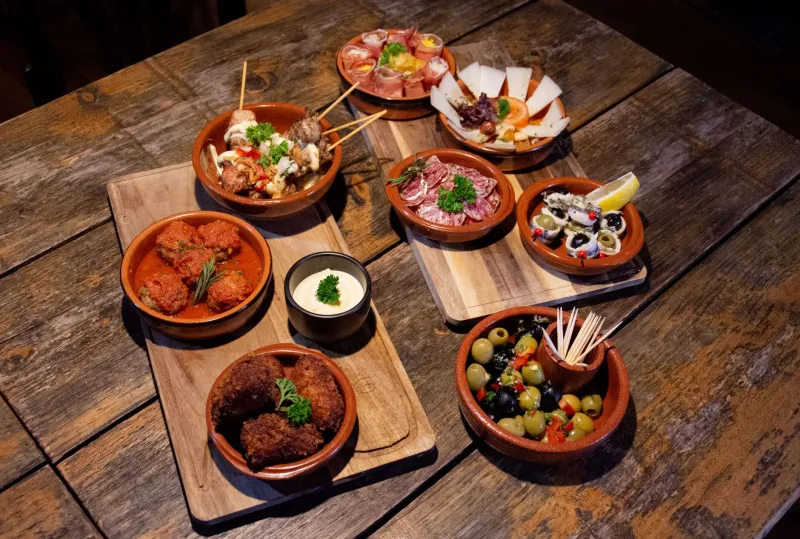
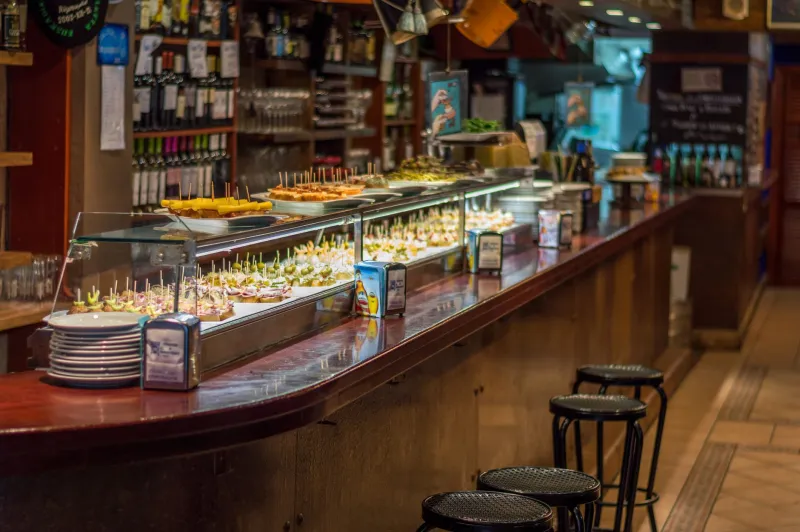
The tapas tradition didn't emerge from abundance. It grew out of bars, out of small kitchens, out of the very practical idea that food should accompany a conversation — not compete with it. A single plate of jamón. A small bowl of marinated olives. Maybe a tortilla española sliced into wedges. That's it. That's the table.
The point was never volume. It was rhythm. You eat a little, you talk, you order something else, you talk more. The food arrives in waves because the evening arrives in waves. Nothing is meant to be consumed all at once, and nothing is meant to impress on sight alone.
Spanish hosts aren't trying to overwhelm you with generosity. They're trying to give you a reason to stay.
Why Americans Default to the Mountain
This isn't a character flaw. It's cultural wiring. American entertaining has always leaned toward abundance as a signal of warmth — think Thanksgiving tables, backyard cookouts, potluck spreads where the goal is to make sure nobody could possibly leave hungry. Fullness equals success. The visual weight of a loaded table communicates care.
Add to that the very American anxiety about being judged as a host, and suddenly you're not just cooking — you're performing. The more you put out, the more protected you feel. If someone doesn't like one thing, there are eleven other options. If the timing is off, there's always something to grab. The mountain becomes a safety net.
But here's the thing about safety nets: guests can feel them. When a table is loaded with options, it stops being an experience and starts being a buffet. People graze. They fill a small plate and wander. The conversation fragments. Nobody lingers over anything because there's too much to get through.
Restraint Is a Hosting Skill, Not a Personality Type
Pulling back isn't easy if your instinct is to pile on. But it's learnable, and it changes everything about how a gathering feels.
Start by thinking in terms of moments rather than options. Instead of asking yourself how many dishes you can fit on the table, ask what three or four things would genuinely make someone pause and pay attention. A really good pan con tomate made with ripe summer tomatoes and good olive oil. A plate of Marcona almonds still warm from the pan. A few slices of a sharp Manchego with a small jar of quince paste on the side. That's a beginning — not a full spread, but an intention.
Then, crucially, you hold things back. You don't put everything out at once. You bring out the next plate when the table is ready for it, when there's a natural lull, when someone finishes their wine and looks up. This is the rhythm Spain perfected, and it's surprisingly easy to replicate at home once you stop trying to front-load the whole evening.
The Conversation Is the Point
Here's the reframe that changes everything: in a Spanish bar, the food exists to extend the conversation, not to be the main event. Nobody goes to a tapas bar and says, "The highlight was definitely the patatas bravas." They say, "We were there until midnight and I don't even know what we talked about, but it was the best night."
That's the actual goal. The food is the vehicle. Restraint keeps the vehicle from taking over the trip.
When you put out less, people focus more. They comment on what's in front of them. They ask where you got the jamón, or whether that dip is homemade, or what's in the spice blend on the shrimp. Those questions are the beginning of conversations. Conversations are the beginning of a good night. You cannot get there if every inch of the table is already spoken for.
A Practical Way to Rebuild Your Instincts
Next time you're planning a tapas-style gathering, try this exercise before you go to the store: write down every single thing you're thinking about making. Then cut the list in half. From what's left, pick the three things you're most excited about. Build around those.
You'll feel the urge to add back in. Resist it — at least at the start. Plan a second round for later in the evening instead. Something warm that comes out of the oven an hour in. A cheese you were saving. A dessert wine you've been waiting for the right moment to open.
That second act is where the night actually deepens. People are looser, the conversation has found its groove, and now here comes something new. That's the tapas rhythm working exactly as intended.
Less Table, More Night
The Spanish didn't build one of the world's most beloved food cultures by doing more. They built it by doing the right things well, then leaving room for the evening to breathe.
Your guests don't need a mountain. They need a reason to pull their chairs a little closer and stay another hour. Give them three perfect things and the promise of more to come, and you'll have done something a loaded table almost never manages.
You'll have made the food feel like an invitation instead of an obligation.