You're Hosting, Not Entertaining: The Real Reason Your Tapas Night Feels Like a Fancy Snack Plate
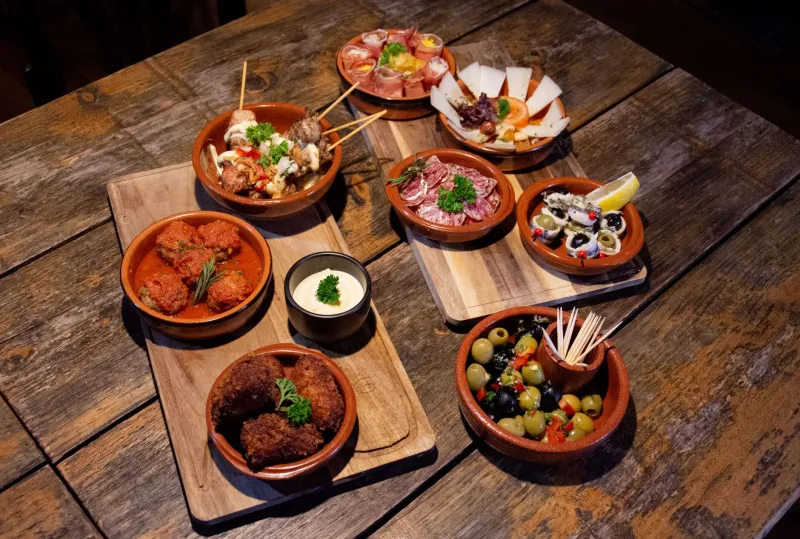
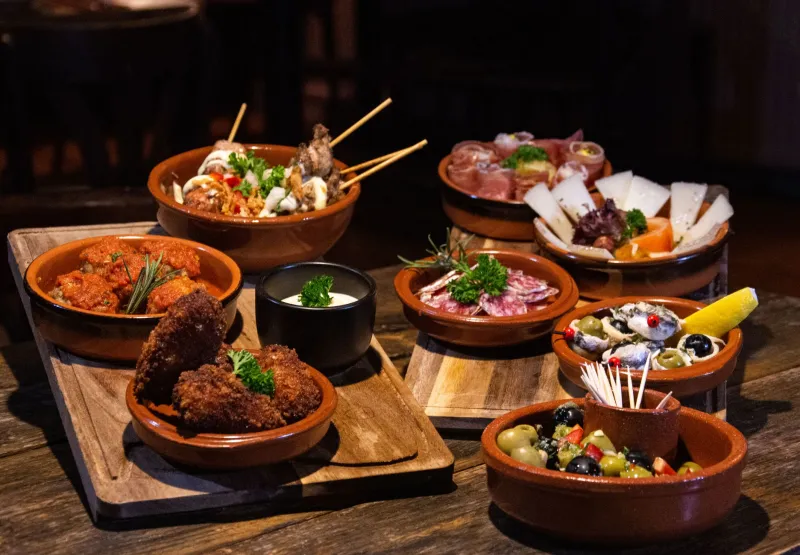
You spent two hours in the kitchen. The jamón is fanned out beautifully. The boquerones are plated with a little drizzle of olive oil and a lemon wedge. Someone brought a bottle of Albariño. By every reasonable measure, you have done the work.
And yet — by 8:30pm, everyone is sitting down, picking at things, checking their phones, and the whole evening has the energy of a pre-dinner snack situation rather than the lively, standing-room gathering you imagined when you first said "let's do tapas."
So what happened?
Here's the uncomfortable truth: you served tapas food, but you didn't host a tapas experience. Those are two very different things, and the gap between them is where most American tapas nights quietly fall apart.
The Seated Trap
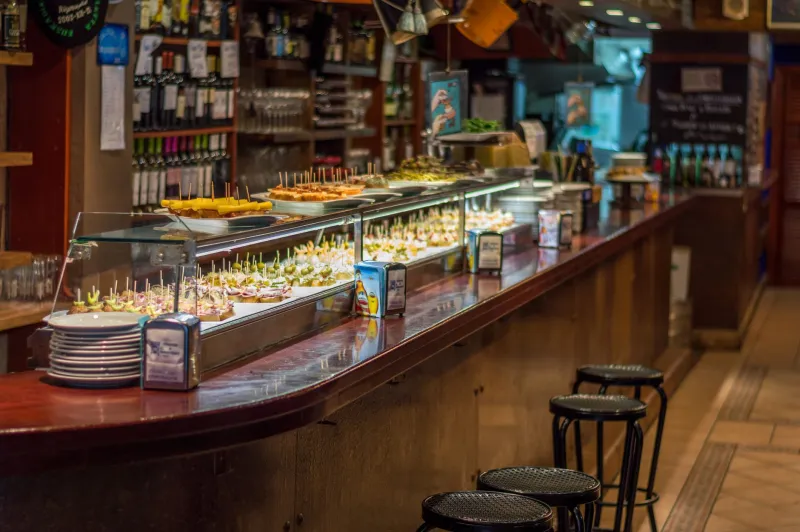
In Spain, tapas culture is fundamentally a standing culture. Not always — plenty of bars have chairs and stools — but the spirit of tapas is rooted in movement. You drift from bar to bar. You lean against a counter. You reach across someone to grab an anchovy. The physical arrangement of the space creates the social dynamic: loose, overlapping conversations, easy exits and entrances, no assigned roles of "host" and "guest" in any rigid sense.
When Americans host tapas, the first thing that usually happens is everyone sits down. At a table. With plates and forks and napkins on laps. And the moment that happens, the evening shifts from tapas culture to appetizer culture — which is a completely different psychological experience.
Appetizers are a prelude. They signal waiting. They say: something bigger is coming, and this is just to tide you over. Tapas, done right, are the whole point. They're not warming up the crowd; they are the crowd.
It's Not About the Food
This is the part that's hard to accept after you've sourced good Manchego and tracked down proper pimentón. The food is not the problem. American access to quality Spanish ingredients has never been better — most decent grocery stores carry the basics, and specialty shops or online retailers fill in the rest.
The problem is structural. It's about how the gathering is designed, not what's on the plate.
Spanish tapas culture operates on a specific rhythm: small amounts arrive, get consumed in conversation, disappear, and are replaced by something new. The food keeps moving, which means the conversation keeps moving, which means the energy in the room keeps moving. Nobody settles into a fixed mode because the environment doesn't allow it.
Compare that to the typical American setup: everything comes out at once, gets arranged on a beautiful board or spread across a coffee table, and then sits there for two hours while people graze. The food stops being an event and becomes furniture.
Pacing as a Hosting Tool
One of the most underrated skills in Spanish bar culture is the timing of when things appear. A good bartender or host doesn't put everything out immediately. They hold things back. They bring out the next round when the energy needs a nudge. They use food as a conversation tool, not just a calorie delivery system.
You can replicate this at home, and it's simpler than it sounds.
Start with one or two things — something salty and snackable, like marcona almonds or a small dish of olives. Let people settle in. Then, fifteen or twenty minutes later, bring out the next thing. Not because you're being precious about the presentation, but because the arrival of something new gives everyone a reason to gather, react, comment, and reconnect.
Keep doing this throughout the evening. The food becomes a kind of social punctuation — each new plate is a comma in the conversation, a reason to pause and engage before moving on.
Rethink the Room
You don't need a bar setup to create a tapas atmosphere, but you do need to think carefully about where people are going to stand, sit, and move.
If your gathering is small enough that everyone ends up at a dining table, that's fine — but push back against the instinct to make it feel like a dinner party. Leave the center of the table open and accessible. Skip the place settings. Put food in spots that require people to reach, lean, and interact rather than having everything right in front of them.
For larger groups, resist the urge to create one central spread. Instead, scatter small plates across different surfaces — a kitchen counter, a side table, the coffee table — so people have to move around to find things. That movement is the whole game. It breaks up the static clusters that kill party energy and forces gentle, organic mingling.
The Conversation Is the Point
Here's something Spanish bar culture understands intuitively that American entertaining often misses: the food is a vehicle for conversation, not the main attraction. Nobody goes to a tapas bar primarily to eat. They go to talk, to be around people, to feel the particular pleasure of a room that's humming with low-level social energy.
When you frame your gathering around that goal — rather than around the food you're serving — everything changes. You stop worrying about whether the patatas bravas are hot enough and start paying attention to whether your guests are actually connecting with each other. You move people around. You introduce people who haven't met. You bring out a new plate specifically because two guests on opposite sides of the room will both want it and will end up talking when they reach for it at the same time.
This is hosting. The food is just the excuse.
A Few Practical Resets Before Your Next Gathering
If you want to close the gap between snacking and actually entertaining the Spanish way, here are a few concrete things to try:
Don't put everything out at once. Hold back at least half your spread and introduce it in waves over the course of the evening.
Lose the forks where you can. Anything that can be eaten by hand should be. Toothpicks, small skewers, crostini — these keep things casual and mobile.
Kill the playlist anxiety. Spanish bars aren't quiet, but they're also not concerts. Background music should be low enough that it doesn't compete with conversation.
Build in a natural standing moment. When you bring out a new plate, don't bring it to people — put it somewhere they have to come to. That walk across the room is a social reset.
Let the evening breathe. Don't rush to the next thing. Gaps in the food flow aren't awkward; they're opportunities for conversation to deepen before the next round pulls everyone back together.
The goal isn't to perfectly replicate a Madrid bar in your living room. It's to understand what makes that experience feel alive — and bring a little of that spirit into the way you gather. The small plates are just the beginning. The rest is up to you.